Story Summary
Discover the classic Korean folktale of Kongji and Patzzi. Learn how a virtuous girl overcomes her stepmother's cruelty with the help of magical protectors.
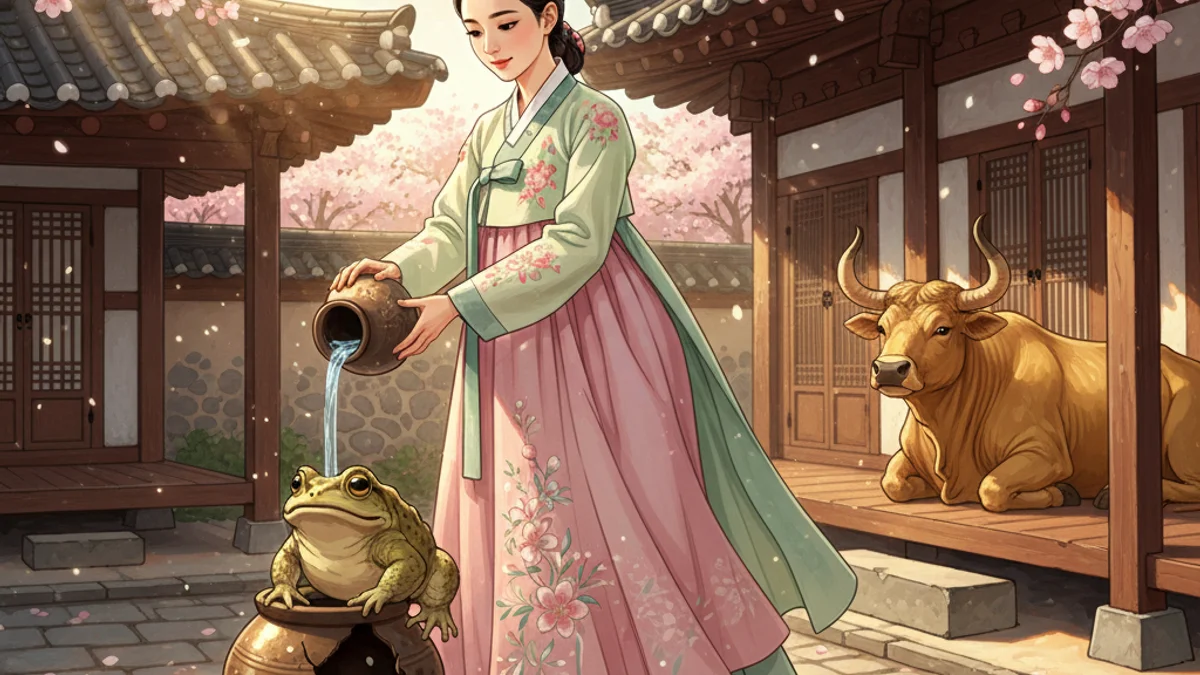
Long ago, a kind girl named Kongji lived with her father. After her mother passed away, her father remarried a woman who brought her own daughter, Patzzi. The stepmother and Patzzi were cruel, forcing Kongji to perform impossible tasks while they lived in luxury. One day, the stepmother ordered Kongji to till a stony field with a wooden hoe, fill a leaky water jar, and hull a mountain of rice before she could attend a village festival. Heartbroken, Kongji was aided by magical beings: a golden ox tilled the field, a toad plugged the hole in the jar, and a flock of sparrows hulled the rice. When she finally set off for the festival, she encountered a magistrate’s procession and accidentally dropped her silk shoe in a stream. The magistrate, captivated by the beauty of the shoe, searched the village for its owner. Though Patzzi tried to claim it, the shoe only fit Kongji. Recognizing her virtue and beauty, the magistrate married Kongji, and she finally escaped her life of hardship.
The Moral
True virtue and kindness will always be recognized and rewarded by the heavens, while cruelty and greed lead to misfortune.
“Even a cracked jar can be filled when the heavens witness a pure heart.”
Fun Fact
This tale belongs to a global group of 'Cinderella' stories, but it is unique for its use of 'Gwon-seon-jing-ak,' a Korean literary theme that translates to 'encouraging virtue and punishing vice.'
Frequently Asked Questions
What is the moral of Kongji and Patzzi?
The moral is that goodness and patience are eventually rewarded, while those who act with malice and jealousy will face their downfall. It emphasizes the traditional Korean value of rewarding virtue and punishing vice.
Is Kongji and Patzzi similar to Cinderella?
Yes, it is often called the Korean Cinderella. Both stories feature a persecuted stepdaughter, a lost shoe, and a marriage to a high-ranking man, though the Korean version features unique agricultural tasks and animal helpers.
Who helped Kongji fill the leaky jar?
A large, magical toad climbed into the earthen jar and used its back to plug the hole. This allowed Kongji to fill the vessel with water and complete her stepmother's impossible task.
What happened to Patzzi at the end of the story?
While endings vary by version, the common theme is that Patzzi and her mother are punished for their cruelty. In the most well-known children's versions, they are simply banished or left in poverty while Kongji thrives.
What historical period is the story set in?
The story is traditionally set during the Joseon Dynasty of Korea. This is evident in the social roles, the presence of a Magistrate, and the traditional clothing described in the tale.
What does the name Patzzi mean?
In Korean, 'Kong' means soy bean and 'Pat' means red bean. The names suggest Kongji is the 'solid' or 'good' bean, while Patzzi represents the more common or 'lesser' bean, reflecting their character archetypes.
Discussion (0)
Share your thoughts on this story
No comments yet. Be the first to share your thoughts!