Story Summary
Witness the tragedy of Laocoon and the Serpents, the Trojan priest whose warning against the wooden horse led to a divine and deadly punishment from the sea.
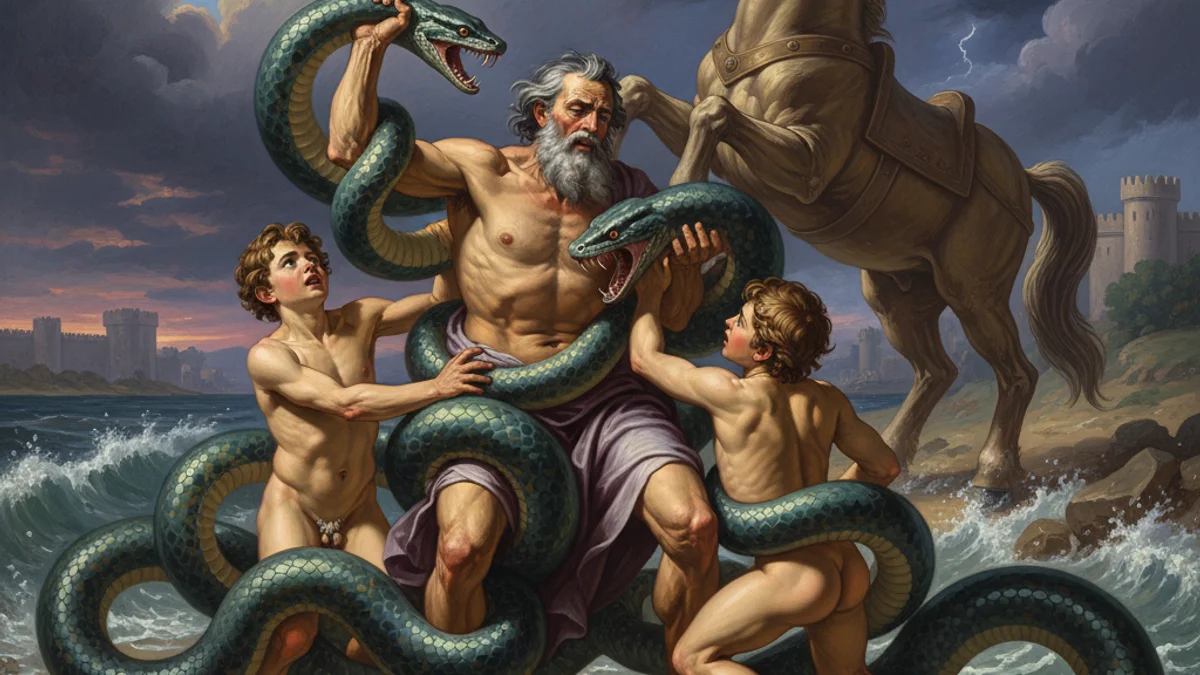
As the Trojan War reached its tenth year, the Greeks vanished, leaving a massive wooden horse outside the gates of Troy. While many citizens rejoiced, thinking the war was over, the priest Laocoon sensed a trap. 'I fear the Greeks, even when they bring gifts,' he famously cried, hurling his spear into the horse's flank. The wood rang with a hollow, ominous sound. However, the gods had decreed Troy’s fall. From the churning sea, two monstrous serpents emerged, slithering onto the shore. They coiled around Laocoon and his two young sons, crushing the life from them in a gruesome display of divine wrath. The Trojans, terrified by this sight, interpreted Laocoon's death as punishment for desecrating a sacred offering. They dragged the horse inside their walls, unknowingly inviting their own destruction.
The Moral
The truth is often silenced by those who prefer a comforting lie or are blinded by fate.
“I fear the Greeks, even when they bring gifts.”
Fun Fact
The famous marble statue of Laocoon was discovered in a Roman vineyard in 1506 and was so influential that Michelangelo himself was present during its excavation.
Frequently Asked Questions
What is the moral of Laocoon and the Serpents?
The moral is that the truth can be dangerous to tell when people are desperate to believe a lie. It also illustrates how divine will can cruelly override human logic and warnings.
Who sent the serpents to kill Laocoon?
In most versions, the serpents were sent by Athena or Poseidon, who supported the Greeks. They wanted to ensure the Trojans would bring the horse inside the city to fulfill the prophecy of Troy's fall.
What did Laocoon say about the Trojan Horse?
Laocoon famously uttered the warning, 'Timeo Danaos et dona ferentes,' which translates to 'I fear the Greeks, even when bearing gifts.' This phrase remains a popular idiom for hidden traps.
Why did the Trojans ignore Laocoon's warning?
The Trojans viewed the serpents attacking Laocoon as a divine sign that he had sinned by striking the wooden horse. They believed the horse was a sacred peace offering that needed to be honored.
What happened to Laocoon's sons?
According to the myth, Laocoon's two sons, Antiphantes and Thymbraeus, were attacked by the serpents first. Laocoon died while trying to save them, making the scene a symbol of tragic parental sacrifice.
Is there a famous statue of this myth?
Yes, the 'Laocoön and His Sons' is one of the most famous ancient sculptures ever discovered. Excavated in 1506, it is currently housed in the Vatican Museums and had a massive influence on Renaissance art.
Discussion (0)
Share your thoughts on this story
No comments yet. Be the first to share your thoughts!