Story Summary
Discover the myth of Midas and the Donkey Ears. After judging a musical contest poorly, King Midas is cursed by Apollo and learns secrets can't be buried.
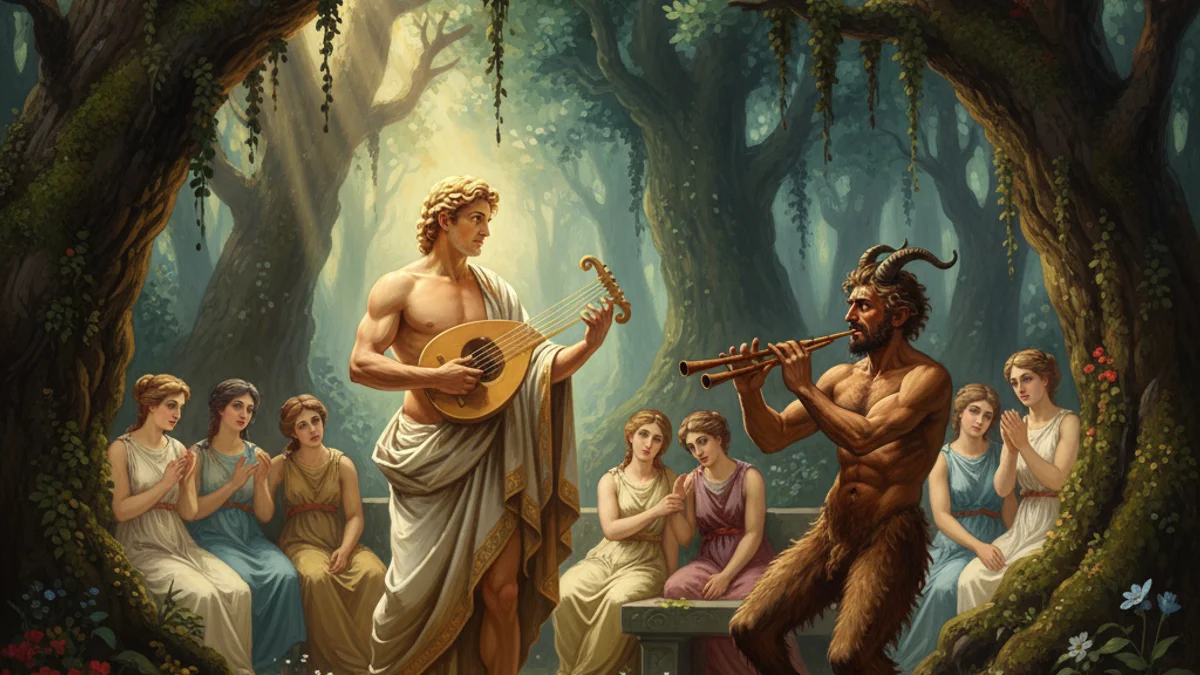
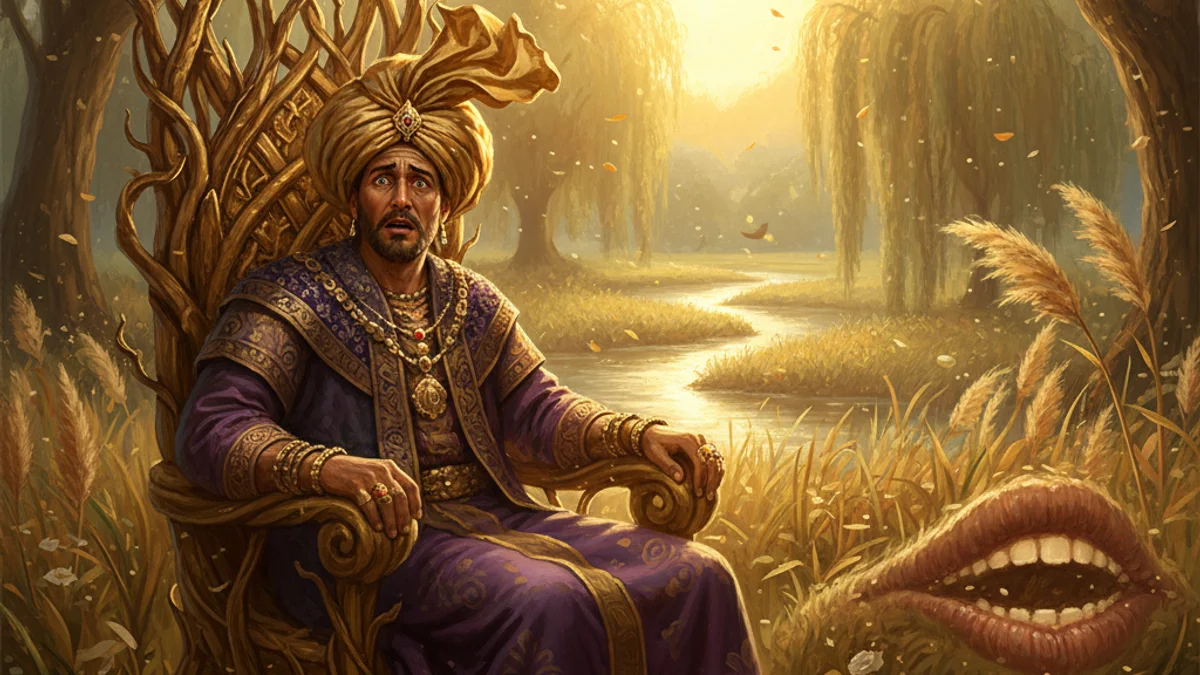
King Midas, having survived his golden touch ordeal, became a devotee of Pan, the god of the wild. When Pan challenged Apollo, the god of music, to a competition, Midas was among the audience. While the mountain god Tmolus judged Apollo’s lyre superior to Pan’s rustic pipes, Midas foolishly disagreed, declaring Pan the winner. Outraged by such musical ignorance, Apollo proclaimed that Midas must have the ears of an ass to match his lack of taste. He transformed the king's ears into long, furry donkey ears. Ashamed, Midas hid them under a large turban, but his barber eventually saw the secret. Burdened by the truth, the barber dug a hole in a meadow and whispered, 'King Midas has donkey ears.' He filled the hole, but reeds grew there soon after. When the wind blew through the reeds, they whispered the secret for all to hear, revealing the king’s shame to the entire world.
The Moral
It is foolish to challenge the wisdom of those more knowledgeable than yourself, and secrets rarely stay hidden forever.
“The wind in the reeds whispers what the heart seeks to hide.”
Fun Fact
This myth is often cited by folklorists as one of the earliest literary examples of nature acting as a witness to human secrets.
Frequently Asked Questions
What is the moral of Midas and the Donkey Ears?
The story teaches that lack of judgment has consequences and that secrets are difficult to keep. It also warns against the vanity of thinking one knows better than the experts or the gods.
Why did Apollo give Midas donkey ears?
Apollo was insulted when Midas chose Pan's simple flute playing over Apollo's masterful lyre music. He gave Midas donkey ears to reflect the king's poor listening skills and lack of taste.
How did the secret of Midas's ears get out?
His barber, unable to keep the secret, whispered it into a hole in the ground. Reeds grew over the spot and whispered the words whenever the wind blew, spreading the news to everyone.
Is this the same Midas with the Golden Touch?
Yes, in Greek mythology, King Midas is featured in multiple stories that portray him as a man of wealth but very poor judgment. Both stories serve as cautionary tales.
Who was Pan in this story?
Pan was the god of the wild, shepherds, and rustic music. He played the syrinx, or panpipes, and was bold enough to challenge the sun god Apollo to a musical duel.
What happened to King Midas at the end?
While versions vary, the most common ending sees Midas publicly shamed when the wind reveals his secret. He is forced to live with the consequences of his foolishness and lack of humility.
Discussion (0)
Share your thoughts on this story
No comments yet. Be the first to share your thoughts!