Story Summary
Explore the legendary Japanese folklore of Tanuki the Trickster. Follow the magical journey of a shape-shifting raccoon dog who brings luck to a kind man.
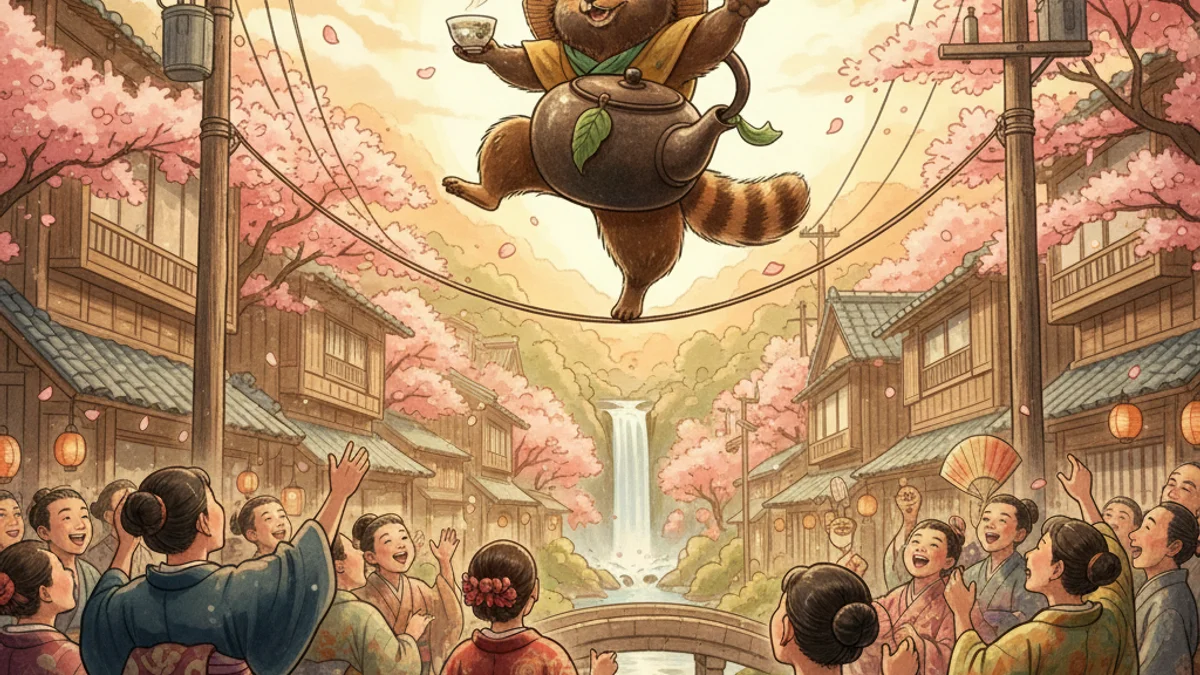
In ancient Japan, the Tanuki was known as a master of disguise and mischief. One famous tale tells of a Tanuki who, caught in a trap by a poor junk dealer, begged for mercy. Moved by the creature's plight, the man released him. To repay the debt, the Tanuki used his magic to transform himself into a beautiful iron tea kettle. The man sold the kettle to a monk at a nearby temple for a handsome price. However, when the monk placed the kettle over a roaring fire, the Tanuki could not bear the heat. Suddenly, a head, bushy tail, and furry legs sprouted from the iron pot, and it ran yelping back to the junk dealer. Realizing the creature's loyalty, the man cared for him, and the two began a traveling circus where the dancing tea kettle became a sensation. Through his magical antics, the Tanuki repaid the man’s kindness with wealth, laughter, and lifelong companionship.
The Moral
True friendship and prosperity are found when we use our unique talents to help those who have shown us genuine kindness.
“Even a kettle has a heart if it beats with the spirit of a friend.”
Fun Fact
In Japanese folklore, Tanuki are said to use magical leaves placed on their heads to facilitate their shape-shifting transformations.
Frequently Asked Questions
What is the moral of Tanuki the Trickster?
The story teaches that kindness toward others, even toward mischievous creatures, results in unexpected rewards. it also highlights the importance of loyalty and using one's gifts for good.
What exactly is a Tanuki in Japanese folklore?
A Tanuki is a Japanese raccoon dog, a real animal often depicted in myths as a supernatural shape-shifter. They are known for being jolly, mischievous, and possessing magical powers.
Is the Tanuki considered a good or evil spirit?
Generally, Tanuki are seen as benevolent tricksters rather than evil spirits. While they might cause minor trouble, they are often associated with good luck, prosperity, and joy.
Why do Tanuki statues often hold a bottle and a scroll?
The bottle represents sake for virtue and the scroll represents trust. These items are part of the 'eight lucky traits' associated with Tanuki statues found outside Japanese shops.
What is the significance of the tea kettle in the story?
The tea kettle, or Bunbuku Chagama, represents the Tanuki's ability to transform into inanimate objects. It symbolizes the blend of the mundane and the magical in Japanese culture.
How does Tanuki folklore influence modern Japanese culture?
Tanuki remain popular icons in modern Japan, appearing in Studio Ghibli films like Pom Poko and as characters like Tom Nook in Animal Crossing, symbolizing luck and commerce.
Discussion (0)
Share your thoughts on this story
No comments yet. Be the first to share your thoughts!