Story Summary
Discover the heartwarming Brothers Grimm tale, The Elves and the Shoemaker. A poor cobbler receives mysterious help at night, leading to wealth and a kind reward.
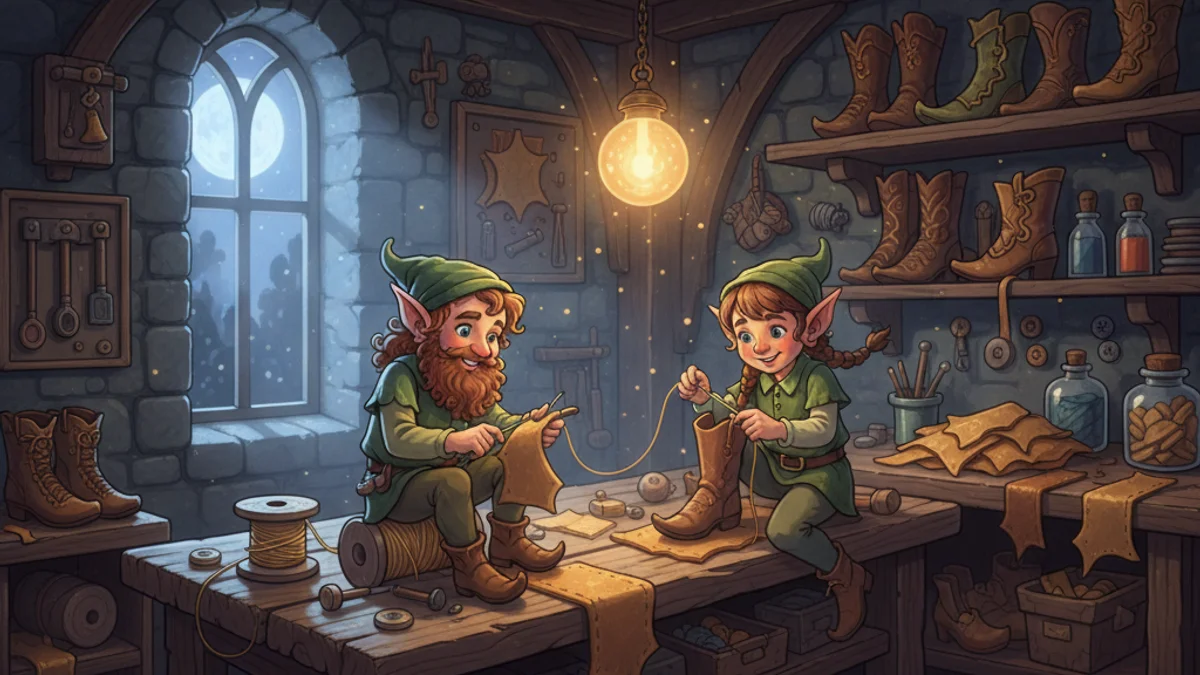
Once there lived an honest shoemaker who had become so poor that at last he had nothing left but enough leather for one single pair of shoes. He cut them out in the evening, intending to sew them the next morning, and went to bed with a clear conscience. To his absolute astonishment, when he entered his workshop the next day, the shoes stood finished upon the table. They were made with such exquisite craftsmanship that not a single stitch was out of place. A customer soon bought them for a high price, allowing the shoemaker to buy leather for two more pairs. Again, he cut them out at night, and again, they were finished by morning. This continued until the shoemaker became a wealthy man. One night near Christmas, he and his wife hid behind a curtain to see who their helpers were. At midnight, two tiny, naked elves appeared and worked busily until the shoes were done. Touched by their help, the wife sewed tiny clothes and shoes for the elves. When the little men found the gifts, they danced with joy, put on their new clothes, and sang, 'Now we are spruce and fine to see; why should we longer cobblers be?' They skipped out the door and were never seen again, but the shoemaker remained prosperous for the rest of his life.
The Moral
Hard work and integrity attract help, and we should always show gratitude to those who support us in our time of need.
“Now we are spruce and fine to see; why should we longer cobblers be?”
Fun Fact
In many German versions of this folklore, giving clothes to helpful spirits is actually a way to banish them, though in the Grimm version, it is portrayed as a kind gift.
Frequently Asked Questions
What is the moral of The Elves and the Shoemaker?
The story emphasizes the importance of gratitude and rewarding those who help us. It also suggests that being a good, hardworking person can attract unexpected kindness and fortune.
Who wrote The Elves and the Shoemaker?
The story was collected and published by Jacob and Wilhelm Grimm, known as the Brothers Grimm, in their 1812 collection 'Children's and Household Tales'.
Why did the elves stop helping the shoemaker?
The elves stopped because they were given clothes, which liberated them from their labor. In many Germanic legends, giving clothes to house spirits signifies their release or retirement from service.
What did the shoemaker and his wife give to the elves?
The shoemaker's wife made two tiny shirts, coats, waistcoats, and trousers, while the shoemaker made two tiny pairs of boots to show their appreciation.
What is the origin of the elves in the story?
The elves are based on the 'Heinzelmännchen' or 'Brownies' of European folklore—small household spirits believed to perform chores in secret during the night.
Is The Elves and the Shoemaker a fairy tale?
Yes, it is a classic fairy tale that features magical elements, supernatural beings, and a rags-to-riches transformation typical of the genre.
Discussion (0)
Share your thoughts on this story
No comments yet. Be the first to share your thoughts!