Story Summary
Discover the classic tale of The Farmer and the Snake. A kind man rescues a frozen serpent only to face its deadly bite. A lesson on inherent nature.
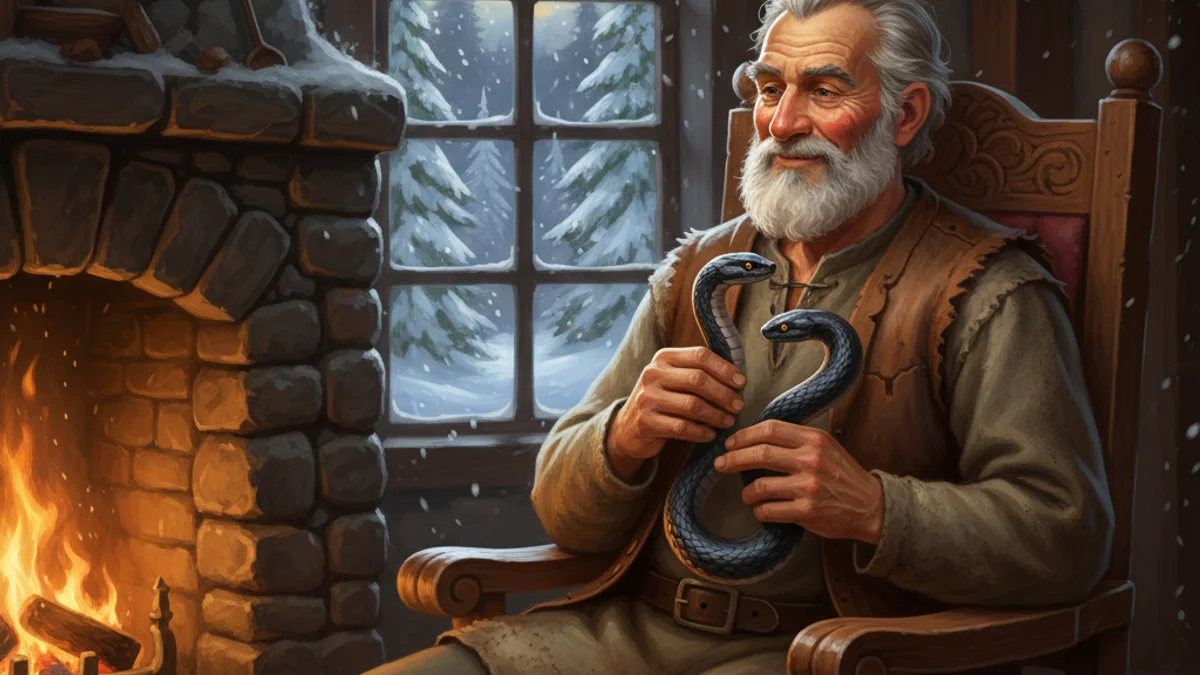
One bitter winter morning, a farmer found a snake stiff and frozen with cold lying in his field. Moved by compassion, the man picked up the creature and placed it inside his coat, close to his chest, to restore it with his own body heat. As the snake grew warm and felt its strength returning, it suddenly struck, sinking its venomous fangs into the very man who had saved its life. As the farmer lay dying, he cried out in his final breath: 'I am rightly served for showing mercy to a scoundrel.'
The Moral
Kindness is wasted on the wicked, and a villain's nature will not change even in response to mercy.
“I am rightly served for pitying a scoundrel.”
Fun Fact
This fable is the direct origin of the English idiom 'to nourish a viper in one's bosom,' which has been used in literature since the 16th century.
Frequently Asked Questions
What is the moral of The Farmer and the Snake?
The moral is that kindness cannot change a naturally malicious nature. No matter how much mercy you show to a villain, they will eventually act according to their true character.
Why did the snake bite the farmer?
The snake bit the farmer because it was following its inherent instincts. In Aesop's fables, certain creatures possess fixed traits that do not change regardless of the kindness they receive.
Is The Farmer and the Snake an Aesop fable?
Yes, it is one of the most famous fables attributed to Aesop. It has been retold for centuries across many different cultures to warn against misplaced trust and naive compassion.
What does the phrase 'to nourish a viper in one's bosom' mean?
This common idiom originates from this specific fable. It describes the act of showing kindness or providing help to someone who is treacherous and will eventually betray you.
What happens to the farmer at the end of the story?
In the traditional version of the tale, the farmer dies from the snake's venomous bite. Before he passes, he expresses regret for his foolishness in trusting a creature known for its malice.
How does this fable relate to real-life relationships?
It serves as a cautionary warning to be discerning when dealing with people who have a history of betrayal. It suggests that some individuals may never change their harmful behaviors despite being treated well.
Discussion (0)
Share your thoughts on this story
No comments yet. Be the first to share your thoughts!