Story Summary
Discover the timeless wisdom of The Farmer's Luck. This classic fable explores why we shouldn't rush to judge events as good or bad in an unpredictable world.
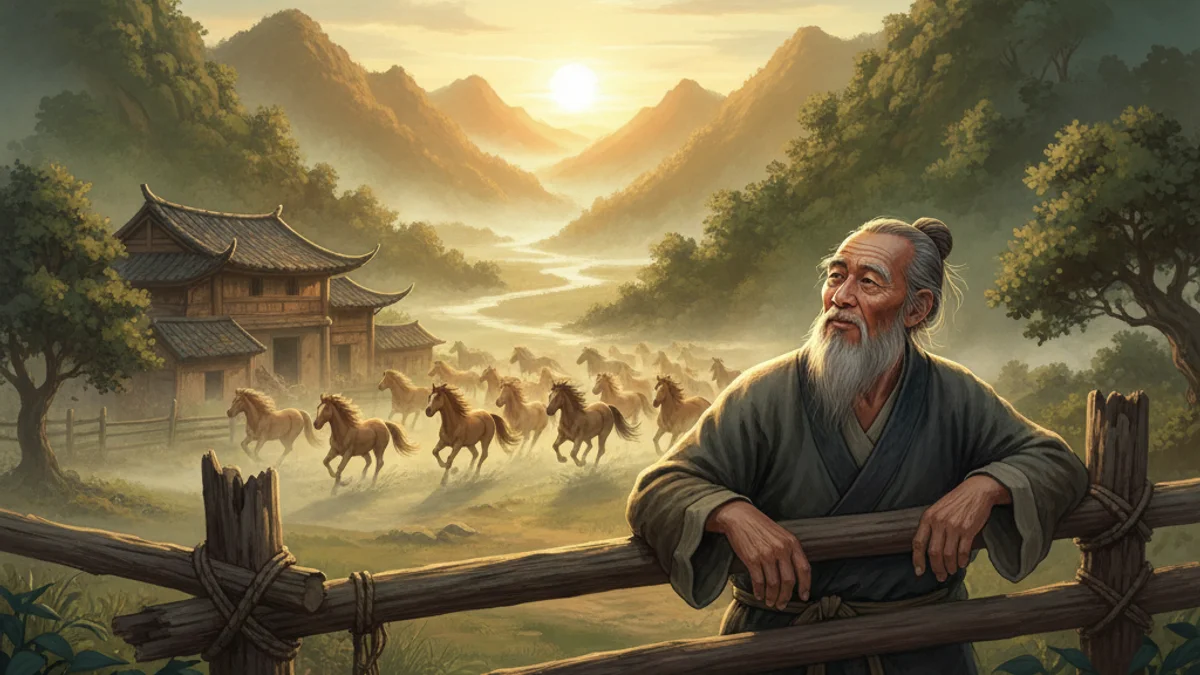
Once there was an old farmer who worked his fields for many years. One day, his horse ran away. His neighbors visited to offer their sympathy. 'What bad luck,' they said. 'Maybe,' the farmer replied. The next day, the horse returned, bringing with it three wild horses. 'What wonderful luck!' the neighbors exclaimed. 'Maybe,' said the farmer. Later, while his son was trying to tame one of the wild horses, he was thrown and broke his leg. The neighbors came again to lament the accident. 'What a tragedy,' they sighed. 'Maybe,' the farmer answered. Soon after, the army entered the village to conscript every able-bodied young man for a bloody war. Seeing the son’s broken leg, they passed him by. The neighbors congratulated the farmer on his good fortune. 'Maybe,' the farmer said once more.
The Moral
We cannot see the full picture of life's events; what seems like a misfortune may be a blessing, and what seems like a blessing may lead to hardship.
“'Maybe,' said the farmer.”
Fun Fact
The story is known in China as 'Sae Weng Shi Ma,' which translates to 'Sae Weng losing his horse' and is used as a common idiom for a blessing in disguise.
Frequently Asked Questions
What is the moral of The Farmer's Luck?
The moral is that it is impossible to know whether an event is truly good or bad in the moment. Life is a series of interconnected events where today's misfortune may become tomorrow's blessing.
What is the origin of The Farmer's Luck story?
This story originates from ancient Chinese philosophy, specifically associated with Taoism. It is often cited from the 'Huainanzi,' a classic text from the 2nd century BC.
Why does the farmer always say 'Maybe'?
He says 'Maybe' to demonstrate emotional detachment and wisdom. He understands that he does not have the foresight to judge the ultimate outcome of any single event.
What is the meaning of the Chinese idiom 'Sae Weng Shi Ma'?
The idiom 'Sae Weng Loses His Horse' refers to this story. It serves as a reminder that a setback may be a blessing in disguise, or vice versa.
Is The Farmer's Luck a Buddhist or Taoist story?
While it shares themes with many Eastern philosophies, it is most closely linked to Taoist teachings. It emphasizes the natural flow of the universe and the balance of Yin and Yang.
How can we apply The Farmer's Luck to modern life?
In modern life, it teaches us to stay resilient and calm during setbacks. By not labeling every negative event as a catastrophe, we maintain the mental peace needed to find new opportunities.
Discussion (0)
Share your thoughts on this story
No comments yet. Be the first to share your thoughts!