Story Summary
Discover The Glass Palace Chronicle, the legendary history of Burmese kings. Explore a rich tapestry of myth, divine lineage, and the royal heritage of Myanmar.
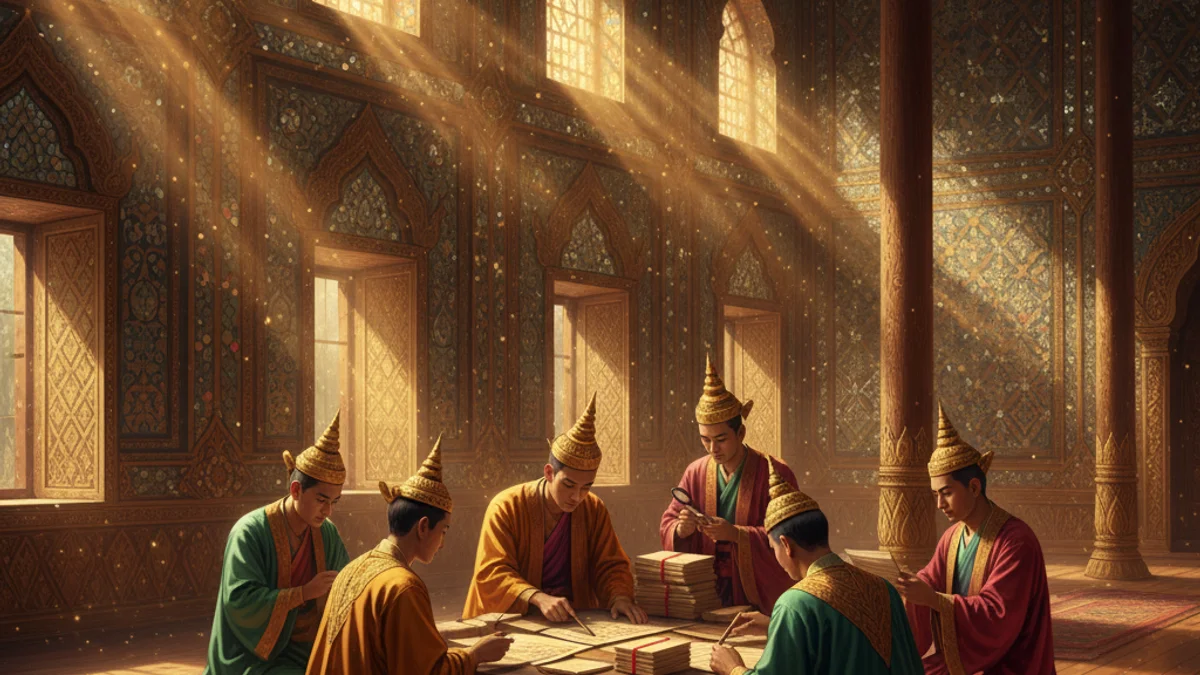
In the early 19th century, King Bagyidaw of the Konbaung Dynasty gathered the most learned monks, scholars, and ministers within the Hmannan, the glorious Glass Palace of Amarapura. He tasked them with a monumental duty: to weave together the disparate legends, palm-leaf manuscripts, and royal records into a definitive history of Myanmar. The chronicle begins not with mortal men, but with the creation of the world and the celestial lineage of the Buddha’s own Shakya clan, from whom the Burmese kings claimed descent. It tells of the legendary Tagaung Kingdom, the rise of the Pyu city-states, and the golden age of Bagan, where King Anawrahta united the land under the banner of Theravada Buddhism. Through tales of white elephants, divine intervention, and the rise and fall of dynasties, the chronicle presents a vision of kingship where power is a reflection of merit. It is a narrative where the boundaries between myth and history blur, asserting that the destiny of the nation is eternally intertwined with the cosmic order and the preservation of the Dhamma.
The Moral
True authority is derived from spiritual merit and the preservation of cultural heritage for future generations.
“The history of kings is the mirror in which the virtue of the present finds its reflection.”
Fun Fact
The Glass Palace Chronicle was written by a committee of thirteen of the kingdom's most brilliant minds, including monks, lay scholars, and court officials.
Frequently Asked Questions
What is the moral of The Glass Palace Chronicle?
The moral is that a nation's strength and a leader's right to rule are rooted in their spiritual merit and their connection to their ancestral heritage. It emphasizes that history serves as a moral compass for the present.
Who commissioned The Glass Palace Chronicle?
The chronicle was commissioned by King Bagyidaw of the Konbaung Dynasty in 1829. He sought to create an authoritative and standardized history of the Burmese monarchy.
Why is it called the 'Glass Palace' Chronicle?
It earned its name because the committee of scholars and monks compiled the work in the 'Hmannan' or Glass Palace. This was a specific royal chamber within the palace complex at Amarapura.
Is The Glass Palace Chronicle historically accurate?
It is a blend of historical facts, royal records, and mythological narratives. While it captures real events and dynasties, it also includes legends to establish the divine legitimacy of the kings.
What time period does the chronicle cover?
The chronicle begins with the Buddhist conception of the beginning of the world and the first kings, continuing through the history of Myanmar up until the year 1821.
Why is this text important to Myanmar today?
It remains a cornerstone of Burmese literature and national identity. It provides the foundational myths and historical framework that have shaped the country's understanding of its royal and religious past.
Discussion (0)
Share your thoughts on this story
No comments yet. Be the first to share your thoughts!