Story Summary
Discover the Chinese legend of Ma Liang in The Magic Paintbrush. A young boy uses his enchanted art to help the poor and defeat a greedy, tyrannical emperor.
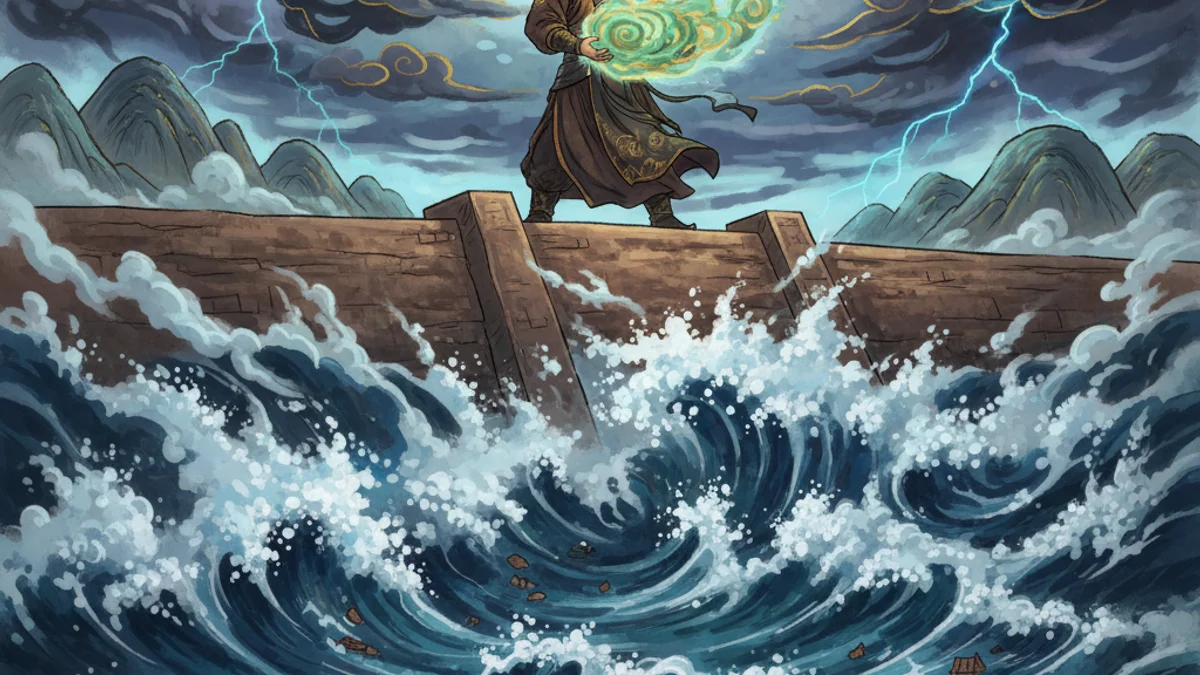
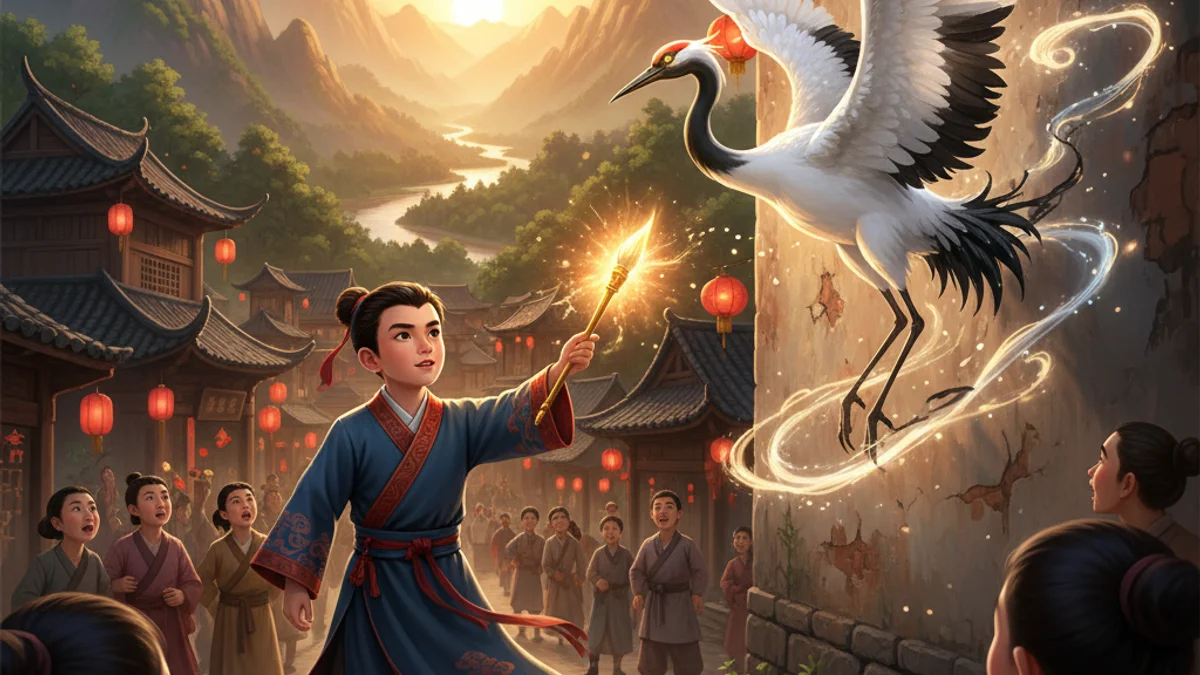
In ancient China, a poor orphan named Ma Liang longed to paint, though he was so destitute he used sticks to draw in the dirt. One night, an old immortal appeared in his dreams and handed him a golden brush, whispering that he must use it only for the good of the people. Upon waking, Ma Liang painted a bird, which immediately fluttered into the sky. He used his gift to provide water for parched fields and tools for the hungry. However, news reached a greedy Emperor, who imprisoned Ma Liang and demanded a mountain of gold. Instead, Ma Liang painted a vast sea and a majestic ship. When the Emperor and his court boarded to find the gold, Ma Liang painted a series of massive waves. The ship capsized, the tyrant vanished, and Ma Liang returned to his village to continue using his art for the poor.
The Moral
True talent is a gift meant to serve others, and those who use power for greed will eventually be consumed by their own desires.
“A gift used only for oneself is a gift wasted; art belongs to the hearts of the many.”
Fun Fact
This legend was adapted into one of China's first color animated films in 1954, winning international awards and cementing Ma Liang's status as a cultural icon.
Frequently Asked Questions
What is the moral of The Magic Paintbrush?
The story teaches that talent should be used for the benefit of others rather than for selfish gain. It also demonstrates that greed and cruelty will eventually lead to a person's downfall.
Who is the main character in the story?
The protagonist is Ma Liang, a poor but talented and kind-hearted orphan who loves to draw. He is gifted a magical brush by an immortal and becomes a hero for the common people.
What happens to the Emperor at the end?
The greedy Emperor is lured onto a painted ship in the middle of a painted ocean. Ma Liang draws a powerful storm that causes the ship to sink, symbolizing the Emperor's greed swallowing him whole.
Is The Magic Paintbrush a true story?
While it is a beloved folk legend rooted in Chinese culture, it is a work of mythology and fiction. It was famously written and popularized in the 1950s by the author Hong Xuntao.
What can the magic paintbrush do?
The brush has the supernatural power to bring any illustration to life immediately after it is finished. Ma Liang uses it to create food, tools, and animals to assist struggling villagers.
Why did Ma Liang refuse to paint for the Emperor?
Ma Liang refused because he knew the Emperor was a cruel and selfish tyrant. He had promised the immortal who gave him the brush that he would only use its power to help those in need.
Discussion (0)
Share your thoughts on this story
No comments yet. Be the first to share your thoughts!