Story Summary
Discover the powerful story of The Martyrdom of Guru Tegh Bahadur, the ninth Sikh Guru who sacrificed his life to protect religious freedom for all in India.
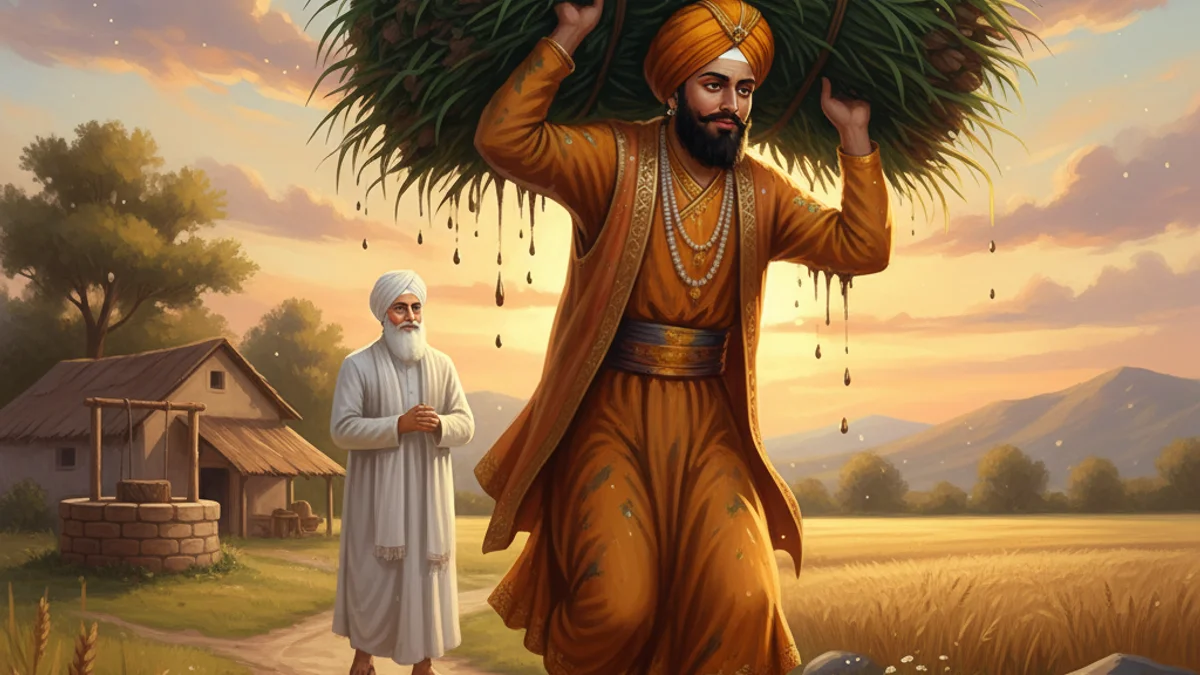
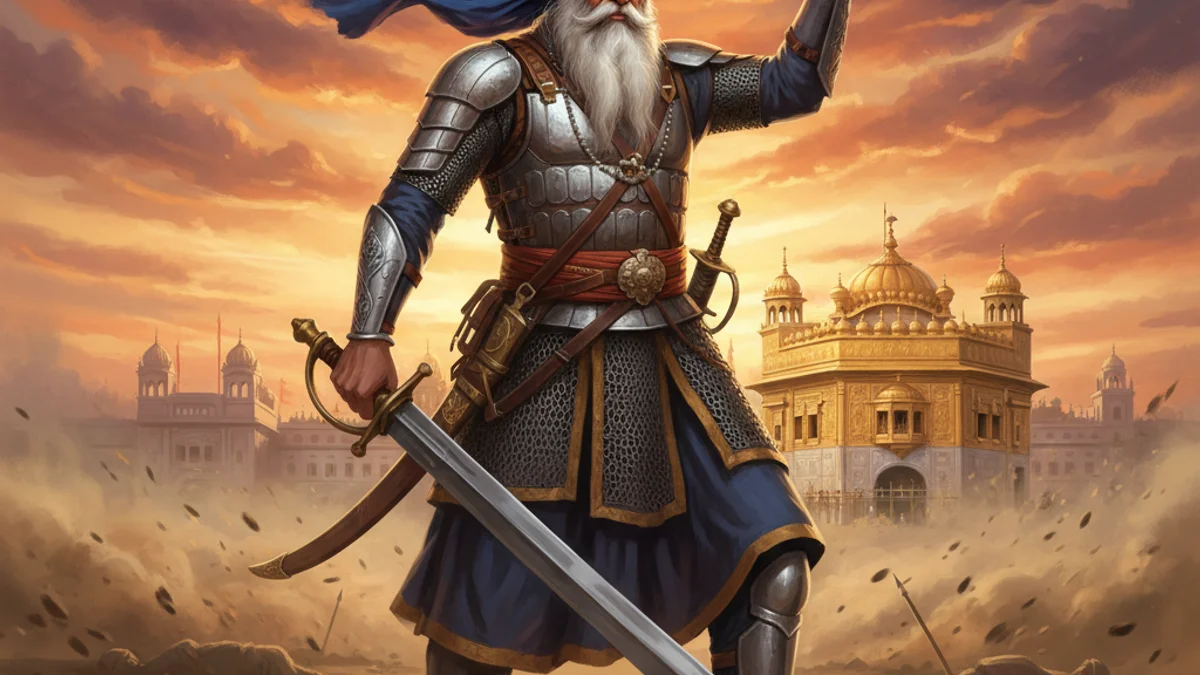
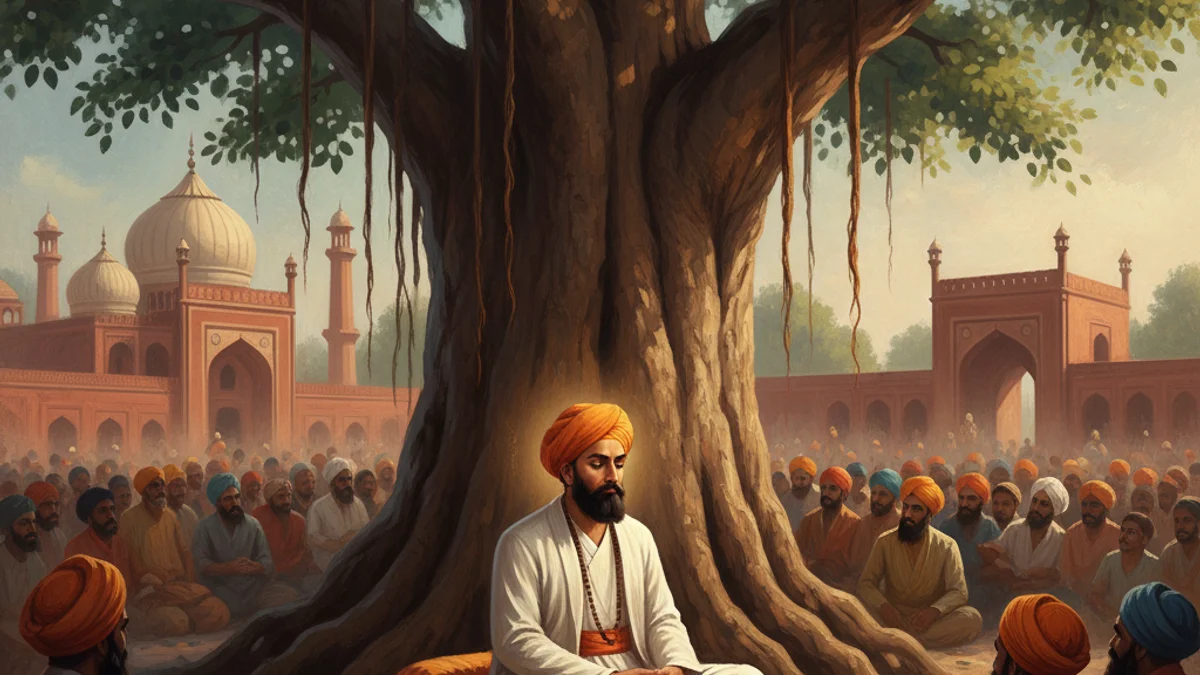
In the 17th century, the Mughal Emperor Aurangzeb sought to establish a single Islamic state across India, leading to the forced conversion of Hindu populations. A group of Kashmiri Pandits, fearing for their lives and faith, approached Guru Tegh Bahadur, the ninth Sikh Guru, at Anandpur Sahib. Moved by their plight, the Guru remarked that a great soul must sacrifice their life to save the oppressed. His young son, Gobind Rai (later Guru Gobind Singh), suggested that no one was more worthy than his father. Accepting this divine mission, Guru Tegh Bahadur challenged Aurangzeb, stating that if the Emperor could convert him, the Pandits would follow. In Delhi, the Guru was imprisoned and witnessed the brutal executions of his loyal followers—Bhai Mati Das, Bhai Sati Das, and Bhai Dayala—who refused to renounce their faith. Despite immense torture, the Guru remained steadfast in meditation. Finally, in 1675 at Chandni Chowk, he was publicly beheaded. His sacrifice, known as 'Hind di Chadar' (The Shield of India), remains a unique instance in history where a leader gave his life to protect the religious freedom of a faith other than his own.
The Moral
True spirituality lies in standing up for the rights of the oppressed and protecting the freedom of conscience for all, even at the cost of one's own life.
“He gave his head, but not his resolve.”
Fun Fact
Guru Tegh Bahadur is the only religious leader in history to have sacrificed his life to protect the fundamental right to practice a religion different from his own.
Frequently Asked Questions
Why is Guru Tegh Bahadur called Hind di Chadar?
He is called 'Hind di Chadar' (Shield of India) because he protected the honor and religious freedom of the people of India by sacrificing himself to stop forced conversions.
Who asked Guru Tegh Bahadur for help?
A delegation of Kashmiri Pandits, led by Pandit Kirpa Ram, approached the Guru to seek protection against the religious persecution and forced conversions ordered by Aurangzeb.
Where did the martyrdom of Guru Tegh Bahadur take place?
The execution took place in Chandni Chowk, Delhi, in 1675. Today, the site is home to the historic Gurdwara Sis Ganj Sahib.
Which followers were martyred alongside Guru Tegh Bahadur?
His devoted companions Bhai Mati Das (sawn in two), Bhai Dayala (boiled in a cauldron), and Bhai Sati Das (burned alive) were martyred for refusing to abandon their faith.
What was the result of Guru Tegh Bahadur's sacrifice?
His sacrifice galvanized the Sikh community and led his son, Guru Gobind Singh, to establish the Khalsa, a warrior brotherhood dedicated to fighting tyranny and injustice.
How did Guru Gobind Singh view his father's martyrdom?
He described it as a unique deed in history, stating that his father performed a great act for the sake of others' faith and refused to perform miracles to save his own life.
Discussion (0)
Share your thoughts on this story
No comments yet. Be the first to share your thoughts!