Story Summary
Discover the touching Mongolian legend of The Orphan Boy and the Horse, a tale of loyalty and the magical origin of the Morin Khuur, the horse-head fiddle.
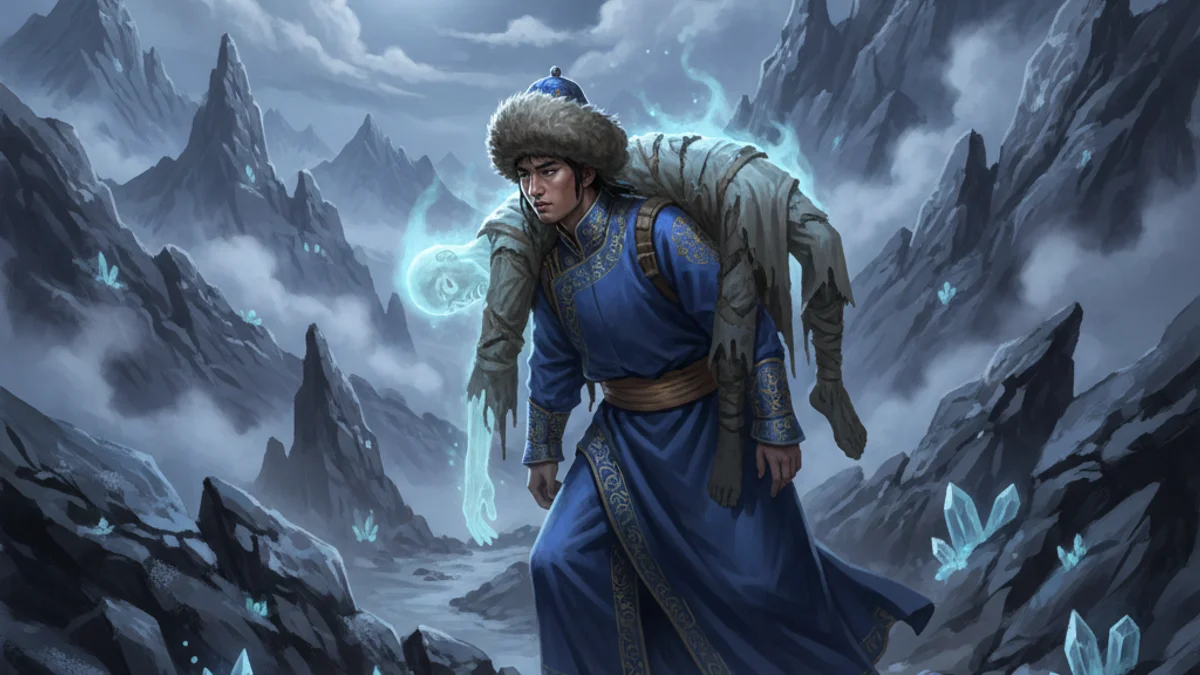
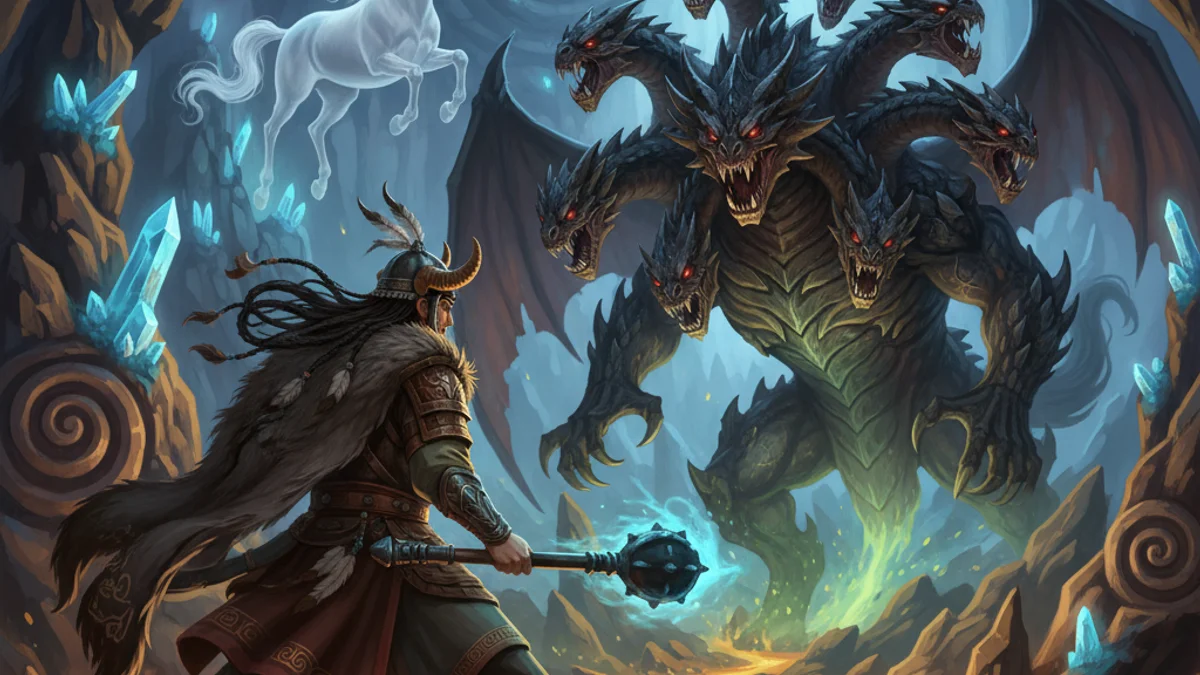
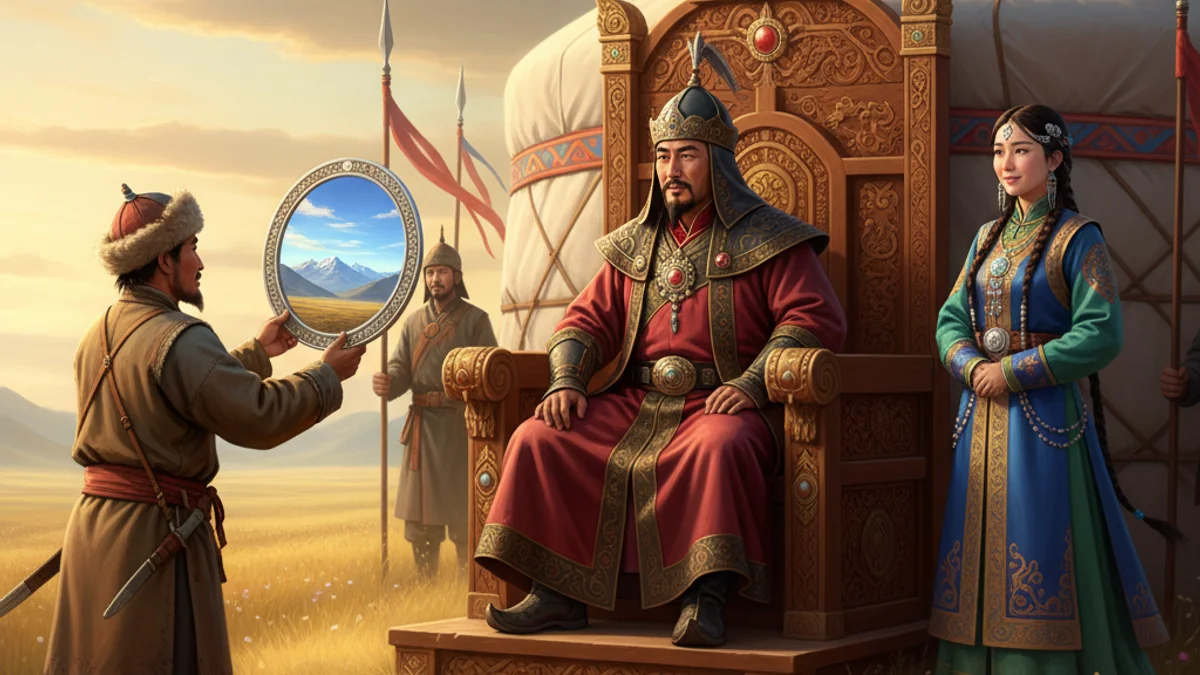
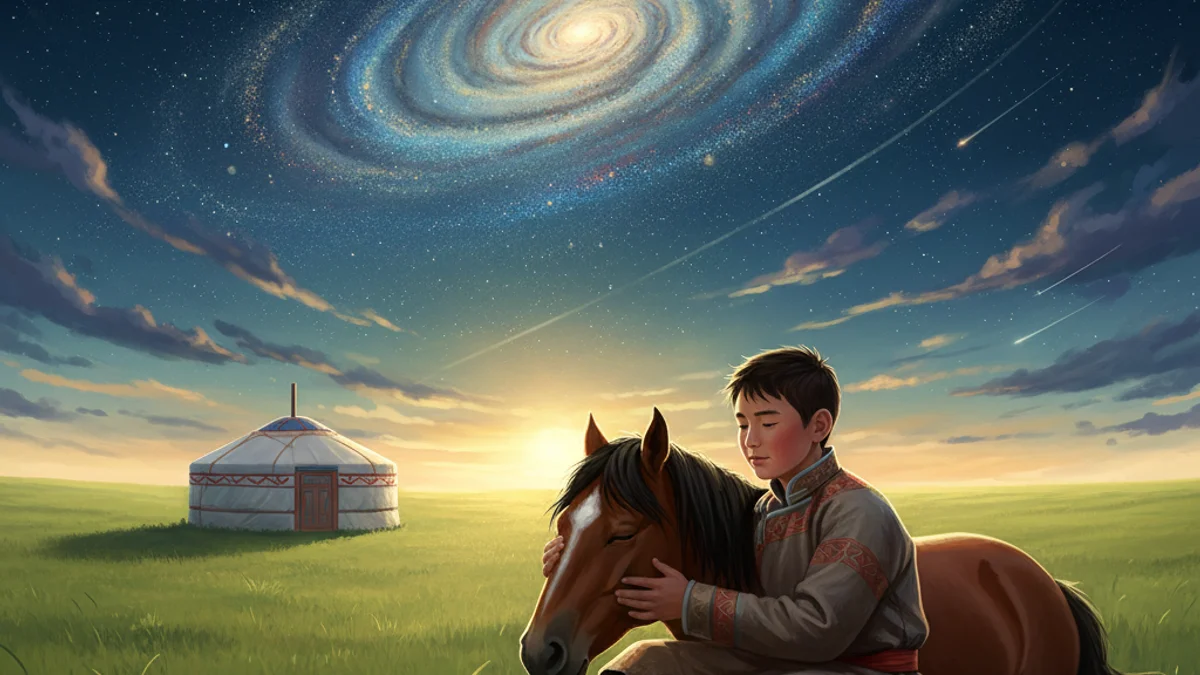
On the vast Mongolian steppes lived a poor orphan boy who had nothing but his kindness. One day, he found a weak, abandoned foal and nursed it back to health with his meager rations. As the horse grew, it revealed a magical secret: it possessed wings of wind that allowed it to fly across the heavens. Every night, the boy flew his celestial steed to visit a beautiful princess in a distant land. However, a jealous lord grew envious of the boy's happiness and the horse's incredible speed. In a fit of spite, the lord ordered his archers to kill the magnificent creature. Heartbroken, the boy sat by his fallen friend until the horse's spirit spoke to him in a dream, instructing him to use its body to create a musical instrument. The boy carved a horse's head for the neck, used the hide for the soundbox, and the tail hair for the strings. Thus, the first Morin Khuur, or horse-head fiddle, was born, allowing the boy to hear his friend's voice in every melody he played.
The Moral
True friendship and loyalty can transcend death, and profound grief can be transformed into beautiful art that honors the departed.
“Though its wings are stilled and its breath has vanished, its voice shall sing forever across the plains.”
Fun Fact
The Morin Khuur is recognized by UNESCO as a Masterpiece of the Oral and Intangible Heritage of Humanity, and its music is said to tame wild animals.
Frequently Asked Questions
What is the moral of The Orphan Boy and the Horse?
The story teaches that deep bonds of loyalty can overcome grief and that art serves as a powerful way to honor those we have lost. It emphasizes the spiritual connection between humans and nature.
Is this story related to the Morin Khuur?
Yes, this folklore is widely considered the origin myth of the Morin Khuur, Mongolia's iconic horse-head fiddle. The instrument's design and sound are meant to mimic the horse’s spirit and movements.
Why did the lord kill the horse?
The lord killed the horse out of jealousy and a desire to control what he could not possess. His actions represent the destructive nature of envy against innocent happiness.
What does the horse represent in Mongolian culture?
The horse is a sacred symbol of freedom, vitality, and survival in Mongolian nomadic life. It is often viewed as a 'wind horse' that carries the human spirit across the plains.
What are the different versions of the boy's name?
While often called 'The Orphan Boy' in general folklore, some specific versions identify him as Kuku Namjil, a man who received a magical flying horse from a mistress.
How did the boy create the first fiddle?
Following his horse's spiritual guidance, the boy used the animal's bones for the frame, its skin for the sounding board, and its tail hair for the strings and the bow.
Discussion (0)
Share your thoughts on this story
No comments yet. Be the first to share your thoughts!