Story Summary
Discover The Stork and the Crab, a classic Panchatantra tale about a deceptive bird outsmarted by a brave crab. A timeless lesson on quick thinking and justice.
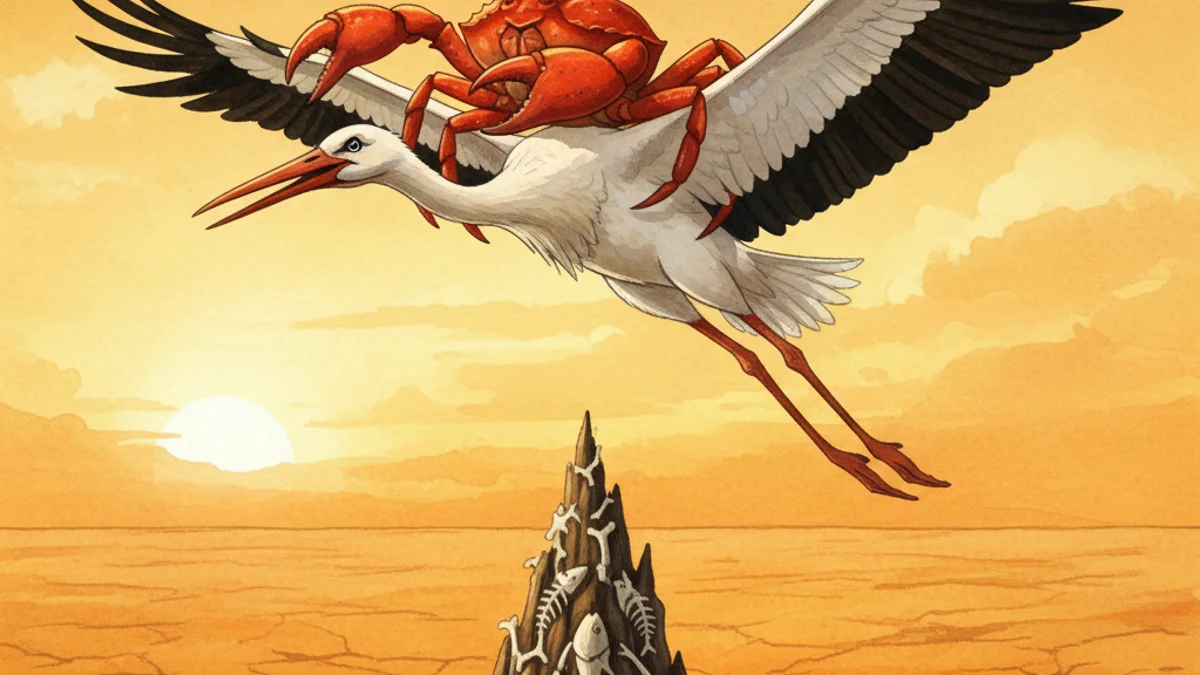
An old stork, no longer fast enough to catch fish, devised a cunning plan. He stood by the pond looking heartbroken. When the fish asked why, he lied that a great drought was coming and the pond would soon dry up. He offered to carry the fish, one by one, to a larger, safer lake nearby. Trusting him, the fish agreed. Instead of a lake, the stork carried them to a large rock and ate them. One day, a crab asked for a ride. As they flew, the crab looked down and saw a pile of fish bones on the rock. Realizing the stork's treachery, the crab acted quickly. He clamped his sharp pincers around the stork’s neck, killing the deceiver and saving himself. Returning to the pond, the crab told the others of the stork’s lies, proving that wit is the ultimate weapon against malice.
The Moral
Wit and presence of mind are more powerful than any deception.
“The sharpest pincers are those of a mind that sees through a lie.”
Fun Fact
The Panchatantra, where this story originated, was translated into over 50 languages by the year 1600, making it one of the most widely traveled tales in human history.
Frequently Asked Questions
What is the moral of The Stork and the Crab?
The moral is that presence of mind and quick thinking can overcome even the most cunning enemies. It also teaches that greed and deception eventually lead to one's own destruction.
Who wrote the story of The Stork and the Crab?
This story originates from the Panchatantra, an ancient Indian collection of interrelated animal fables in Sanskrit verse and prose, attributed to Vishnu Sharma.
Why did the stork pretend to be sad?
The stork pretended to be sad to gain the trust of the fish. By appearing pious and worried about a fake drought, he convinced them that he was their protector rather than their predator.
How did the crab realize the stork was lying?
While being carried through the air, the crab looked down at a large rock and saw a heap of fish bones, realizing they belonged to the friends the stork had promised to save.
What does the stork symbolize in this fable?
The stork symbolizes a deceptive person or a 'wolf in sheep's clothing' who uses false kindness and manipulation to exploit the trust of others for personal gain.
Is The Stork and the Crab a Jataka tale?
Yes, variations of this story also appear in the Jataka tales, which are ancient Buddhist stories about the previous lives of the Buddha, often featuring animal characters.
Discussion (0)
Share your thoughts on this story
No comments yet. Be the first to share your thoughts!