Story Summary
Discover the epic tale of King Gesar, Tibet’s legendary hero-king who defeated demons and restored justice to the world in this classic Buddhist folklore saga.
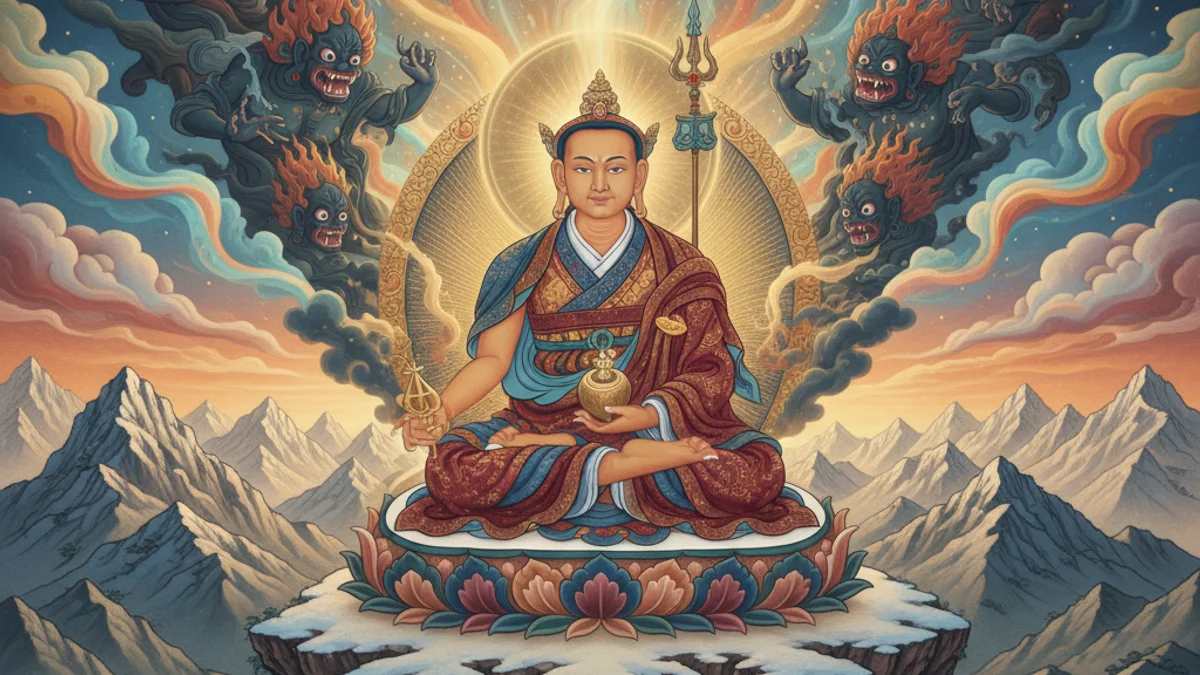
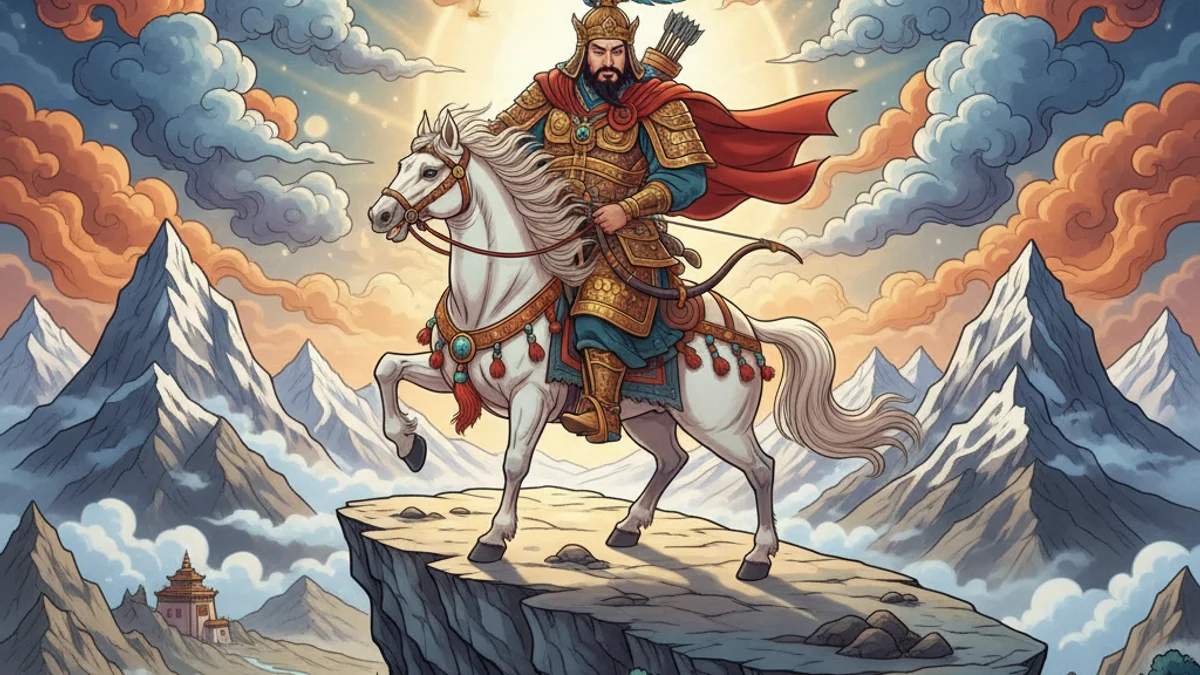
Long ago, the world was overrun by cruel demons and greedy kings who oppressed the people and obscured the light of the Dharma. Seeing this suffering, the celestial deities and Guru Rinpoche decided to send a divine hero to Earth. The spirit of the deity Thopa Gawa descended into the human realm, born as the son of a celestial mother and a king. Though he was born into humble circumstances and faced early exile due to his jealous uncle Atra, the young boy possessed miraculous powers and supernatural wisdom. To determine the rightful ruler of the land of Ling, a grand horse race was organized. Against all odds and despite the sabotage of his uncle, the boy—now known as Gesar—won the race on his magical steed. Upon his victory, he ascended the throne as King Gesar of Ling. Throughout his reign, he embarked on a series of twelve epic battles, conquering the four great demon-kings of the cardinal directions and liberating his people from darkness. Having restored peace and the Buddhist faith to the world, King Gesar eventually ascended back to the celestial realms, leaving behind a legacy as the eternal protector of the righteous.
The Moral
True leadership is defined by the courage to fight injustice and the wisdom to use power for the benefit of all beings.
“I am the subduer of demons, the protector of the poor, and the light of the snowy mountains.”
Fun Fact
The Epic of King Gesar is over a thousand years old and contains over 20 million words, making it more than 25 times the length of the Iliad.
Frequently Asked Questions
What is the moral of The Story of Gesar?
The moral is that divine power and human courage must be used to protect the weak and uphold righteousness against greed. It emphasizes that a true hero serves the Dharma and the community rather than personal ambition.
Is King Gesar based on a real historical figure?
While he is a legendary figure in folklore, many historians believe Gesar may be loosely based on a 12th-century Tibetan tribal leader or a combination of various historical kings. He has since evolved into a national hero and a Buddhist deity.
What is the significance of the Epic of King Gesar?
The Epic of King Gesar is recognized as the world's longest epic poem, passed down for centuries by wandering bards. It represents the cultural identity of Tibet and the triumph of Buddhist principles over primordial chaos.
How did Gesar become the King of Ling?
Gesar won his throne by winning a miraculous horse race that was open to all. Despite being an outcast and a commoner at the time, his divine horse and spiritual prowess allowed him to beat the local lords and his treacherous uncle.
Who are the main enemies King Gesar fought?
He famously fought the 'Four Enemies of the Four Directions,' which were demon-kings representing greed, hatred, and ignorance. These battles symbolize the cleansing of the human spirit and the restoration of natural order.
Why is Gesar called a 'Dharma King'?
He is called a Dharma King because his primary mission was to protect and propagate the teachings of Buddhism. His wars were viewed as 'skillful means' to remove obstacles that prevented people from practicing the faith.
Discussion (0)
Share your thoughts on this story
No comments yet. Be the first to share your thoughts!