Story Summary
Explore The Story of Tam and Cam, a classic Vietnamese folklore tale of a kind girl who overcomes her cruel stepmother through magic, rebirth, and resilience.
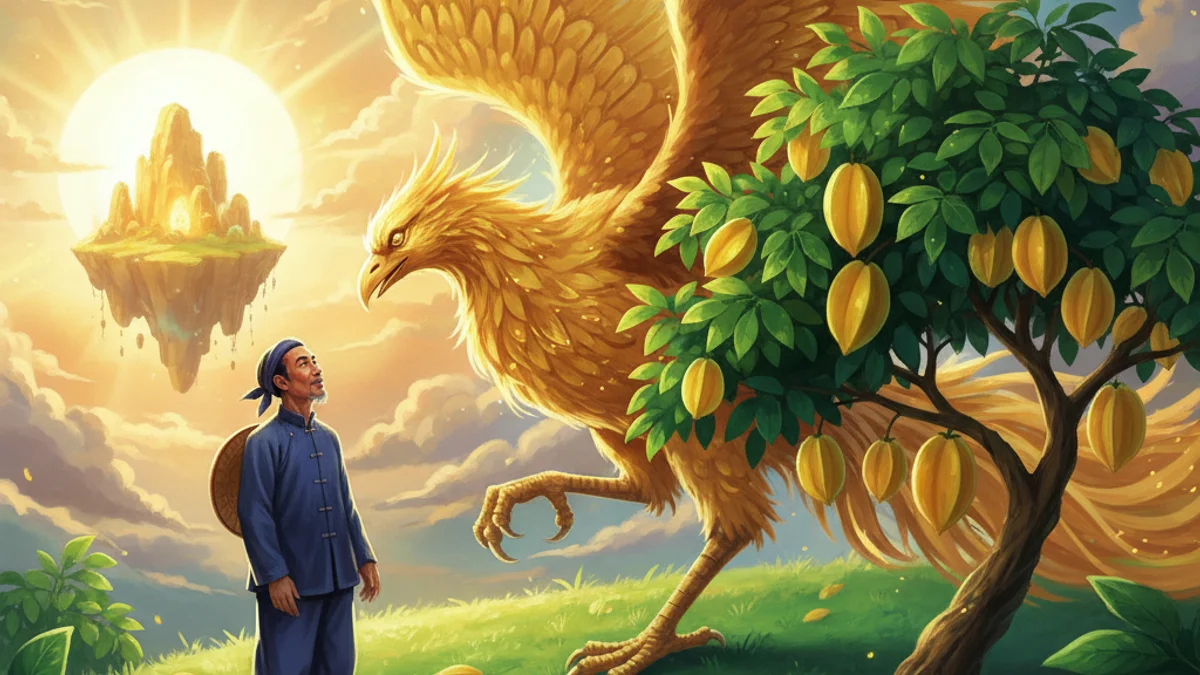
Once, a beautiful girl named Tam lived with her father, her cruel stepmother, and her spoiled half-sister, Cam. After her father passed away, Tam was treated like a servant. One day, the sisters were sent to catch fish; Cam stole Tam's catch, but Tam was comforted by a golden fish sent by the goddess Bụt. When the stepmother killed the fish, Tam buried its bones, which magically transformed into beautiful clothes for the King's festival. While rushing to the palace, Tam lost a silk slipper. The King, finding the tiny shoe, declared he would marry whoever it fit. Only Tam's foot slid in perfectly. Jealous, the stepmother later killed Tam by tricking her into climbing an areca tree and cutting it down. Tam's soul underwent multiple reincarnations—a golden oriole, a weaving loom, and a fragrant Thị fruit—continually haunting and warning her sister. Eventually, she emerged from the fruit to help an old woman, where the King found her again. Tam was restored to her throne, while Cam and the stepmother met a dark fate brought on by their own greed.
The Moral
Virtue and patience will eventually be rewarded, while those who practice cruelty and deceit will inevitably face their own destruction through the law of karma.
“Even through the fire of betrayal and the silence of the grave, a virtuous soul will always find its way home.”
Fun Fact
This story is considered the 'Vietnamese Cinderella' and is one of the most culturally significant examples of 'The Persecuted Heroine' trope in world literature.
Frequently Asked Questions
What is the moral of The Story of Tam and Cam?
The central moral is that goodness and resilience triumph over evil. It reinforces the concept of karma, where the virtuous are eventually rewarded and the wicked face the consequences of their actions.
How is Tam and Cam different from Cinderella?
While both share the 'lost slipper' motif, the Vietnamese version includes several cycles of reincarnation. Tam dies and returns as a bird, a tree, and a fruit before regaining her human form, making it a story of spiritual persistence.
Who is the character Bụt in the story?
Bụt is a benevolent deity, often associated with the Buddha, who appears to help Tam in her moments of despair. He provides her with the golden fish and magical assistance to attend the King's festival.
What happened to Cam at the end of the story?
In the traditional folklore, Cam asks Tam how to become as beautiful as she is. Tam tells her to jump into boiling water; Cam does so and dies, followed by the stepmother dying of grief and shock.
What does the Thị fruit symbolize in the tale?
The Thị fruit (persimmon) represents Tam's final stage of reincarnation and her lingering essence. It symbolizes her purity and the fragrant legacy of a good soul that cannot be destroyed by death.
Why did the stepmother kill the golden fish?
The stepmother killed the fish out of pure malice and jealousy. She wanted to destroy the only source of comfort and companionship Tam had, attempting to keep Tam in a state of perpetual misery.
Discussion (0)
Share your thoughts on this story
No comments yet. Be the first to share your thoughts!