Story Summary
Embark on The Voyage to Hawaiki, a legendary Polynesian myth of migration and discovery as brave navigators cross the Pacific to find a new ancestral home.
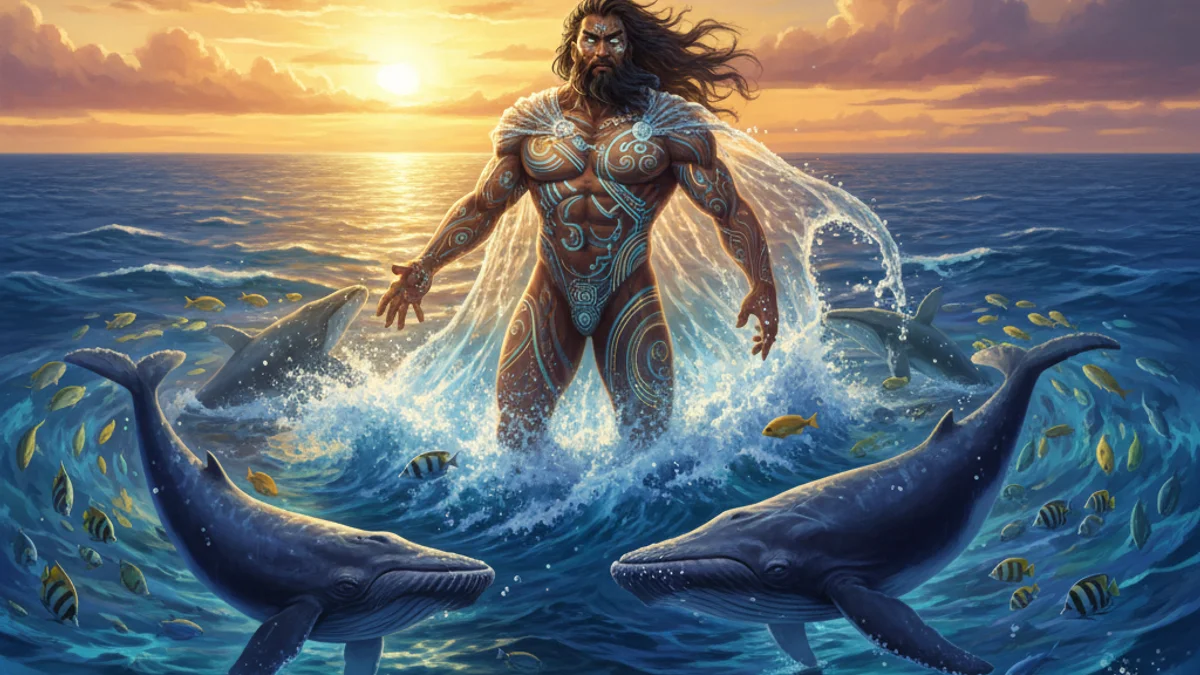
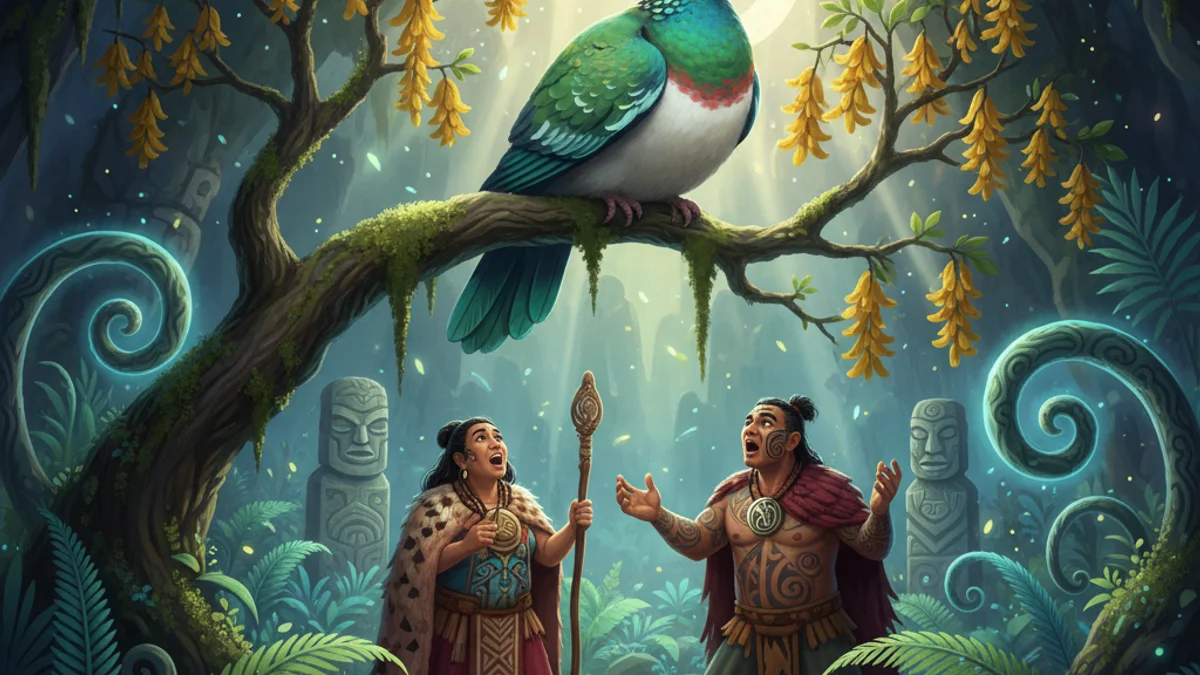
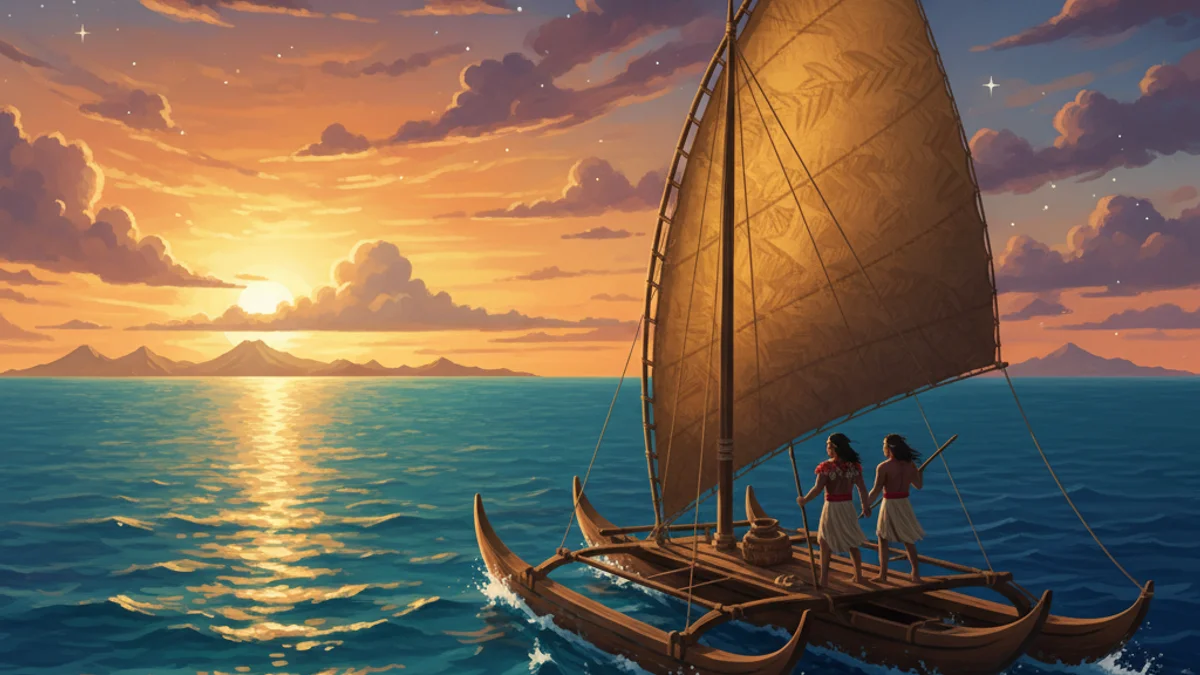
Long ago, in the ancestral homeland of Hawaiki, life became difficult due to overpopulation and conflict. The legendary navigator Kupe, following the trail of a giant octopus belonging to his rival Muturangi, set out across the unknown waters of Te Moana-nui-a-Kiwa. Guided by the rising stars, the flight patterns of the godwits, and the rhythmic pulse of the ocean swells, his great double-hulled waka sliced through the waves. Alongside his wife Kuramarotini, he navigated the vast blue wilderness until a long, white cloud appeared on the horizon. This was Aotearoa, the Land of the Long White Cloud. Though Kupe eventually returned to Hawaiki to share his discovery, his voyage paved the way for the great migrations. Armed with sacred plants and ancestral wisdom, fleets of waka soon followed, binding the islands of the Pacific together through the courage of those who dared to chase the stars.
The Moral
True discovery requires the courage to leave the safety of the shore and trust in the wisdom of nature and one's ancestors.
“I follow the stars to a land hidden beneath a long white cloud.”
Fun Fact
While Hawaiki is a spiritual concept, many scholars link it to the island of Raiatea in the Society Islands, which was an ancient center for Polynesian voyaging and culture.
Frequently Asked Questions
What is the moral of The Voyage to Hawaiki?
The moral is that progress and survival often require the bravery to venture into the unknown. It emphasizes that by honoring tradition and observing the natural world, one can navigate even the most daunting challenges.
What is Hawaiki in Polynesian mythology?
Hawaiki is the legendary ancestral homeland of many Polynesian peoples. It is regarded both as a physical place in the Pacific from which migrations began and a spiritual realm where souls return after death.
Who was Kupe the navigator?
Kupe is a central figure in Māori tradition, credited with the discovery of Aotearoa (New Zealand). He was a master wayfinder who used the stars and ocean currents to explore the vast Pacific.
How did ancient Polynesians navigate without maps?
Navigators used a system called wayfinding, which involved reading the stars, the sun's position, wave patterns, and the behavior of birds. This allowed them to traverse thousands of miles of open ocean with incredible precision.
What is a Waka Hourua?
A waka hourua is a traditional double-hulled sailing canoe. These vessels were the height of ancient maritime technology, designed to carry people, plants, and animals across the Pacific during the great migrations.
Why did the people leave Hawaiki?
Traditional stories suggest that resource scarcity, tribal wars, and the desire for new beginnings prompted the migrations. The voyages were planned expeditions to find land where their people could thrive in peace.
Discussion (0)
Share your thoughts on this story
No comments yet. Be the first to share your thoughts!