Story Summary
Discover the transformative journey of Oscar Wilde’s The Young King, who rejects coronation splendor after witnessing the suffering behind his royal treasures.
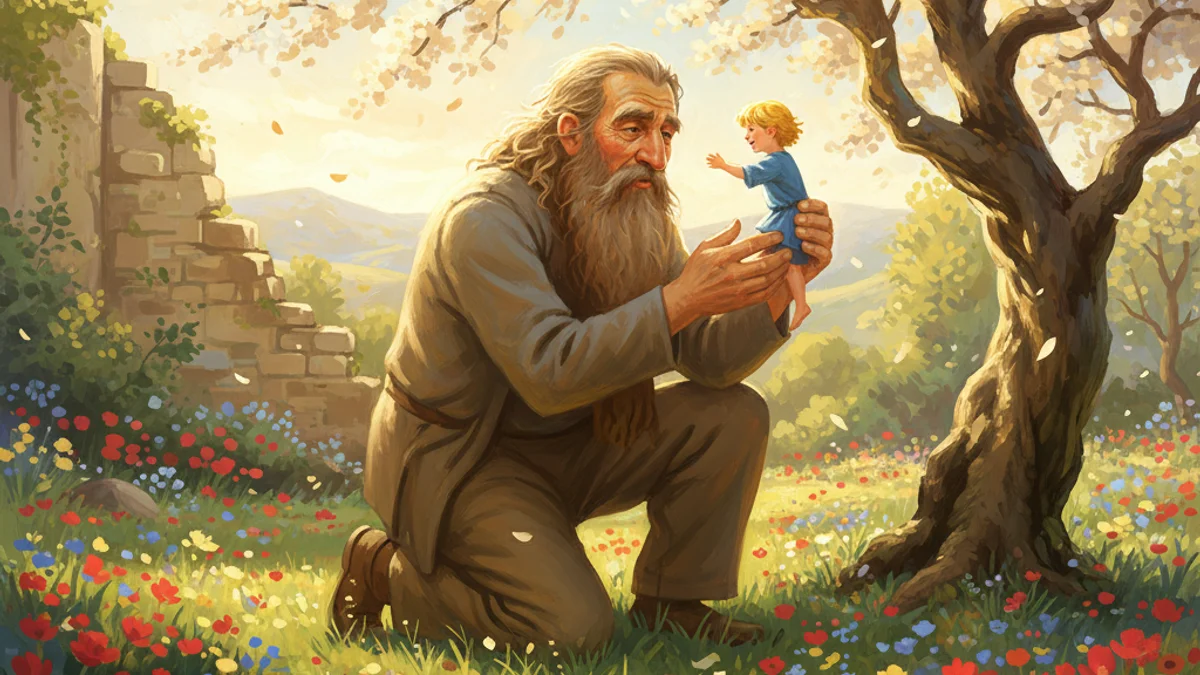
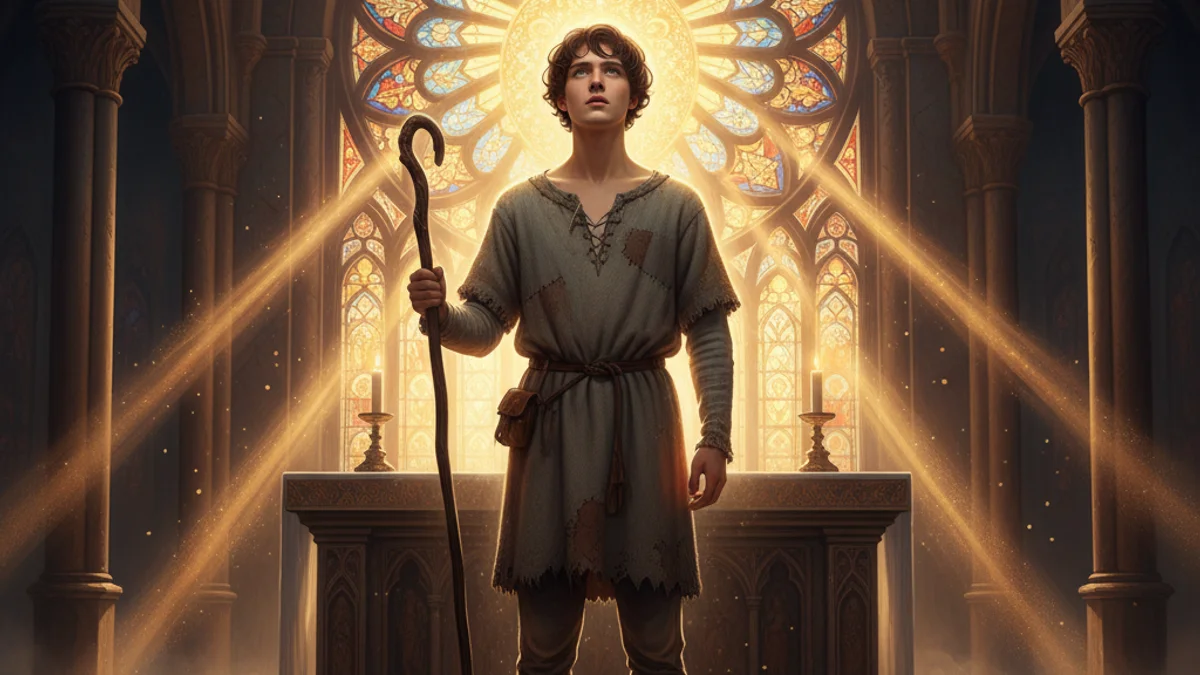
Raised in the forest by a simple shepherd, the Young King was suddenly whisked away to the palace as the secret heir of the old monarch. Enchanted by his new life, he developed an intense passion for rare gems and rich silks, commissioning a magnificent robe of gold, a crown of pearls, and a scepter of rubies for his coronation. However, on the eve of the ceremony, he experienced three haunting dreams. He saw starving weavers toiling at a loom, a dying diver seeking pearls in the shark-infested sea, and laborers perishing in a fever-ridden mine to find rubies. Distraught by the human cost of his luxury, he discarded his finery on the morning of his coronation. Despite the scorn of the court and the warnings of the Bishop, he entered the cathedral in his simple shepherd’s tunic and a crown of briars. As he prayed at the altar, the sunlight transformed his humble clothes into garments more glorious than any man could weave, and he stood before the people crowned not by gold, but by God.
The Moral
True nobility and beauty are found in compassion and sacrifice rather than in material wealth built upon the suffering of others.
“Can that which is woven by the bones of the poor be beautiful?”
Fun Fact
Oscar Wilde wrote this story with a lush, decadent prose style to intentionally contrast the 'beautiful' writing with the ugly reality of the industrial exploitation he was critiquing.
Frequently Asked Questions
What is the moral of The Young King?
The moral is that true value lies in empathy and moral integrity. It teaches that one cannot truly enjoy luxury if it is achieved through the exploitation and misery of the poor.
What are the three dreams in The Young King?
The king dreams of starving weavers making his robe, a diver dying for a pearl for his scepter, and miners perishing from fever while digging for his crown's rubies.
Why did the Young King refuse his coronation robes?
He refused them because his dreams revealed the blood and tears shed by common people to create those treasures. He felt it was a sin to wear the products of such suffering.
How does the story of The Young King end?
After being mocked for wearing a simple tunic and thorns, he is miraculously transfigured by God. His staff blossoms, and he is clothed in divine light that outshines any man-made jewels.
Who is the author of The Young King?
The Young King was written by the famous Irish playwright and poet Oscar Wilde. it was published in 1891 as part of his fairy tale collection titled 'A House of Pomegranates.'
What does the crown of thorns represent in the story?
The crown of briars represents the king's choice to identify with the suffering of the poor and his rejection of worldly vanity in favor of spiritual purity and sacrifice.
Discussion (0)
Share your thoughts on this story
No comments yet. Be the first to share your thoughts!