Story Summary
Experience the thrilling legend of William Tell's Escape as he braves a storm on Lake Lucerne to outwit the tyrant Gessler and secure Switzerland's freedom.
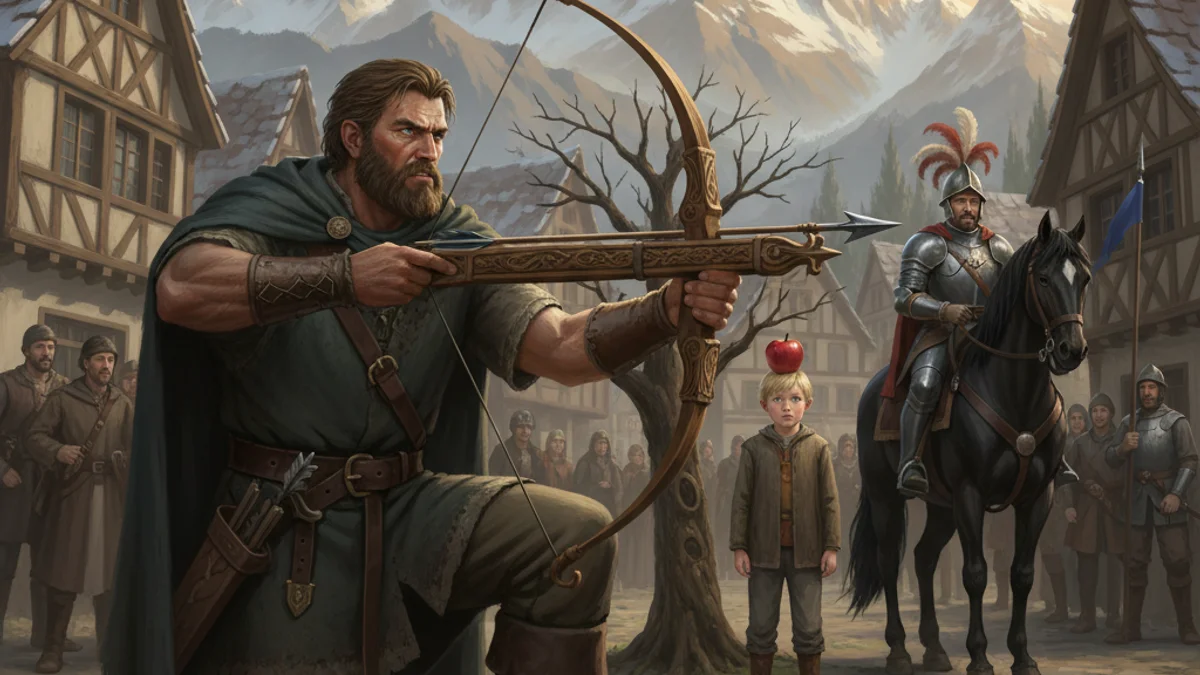
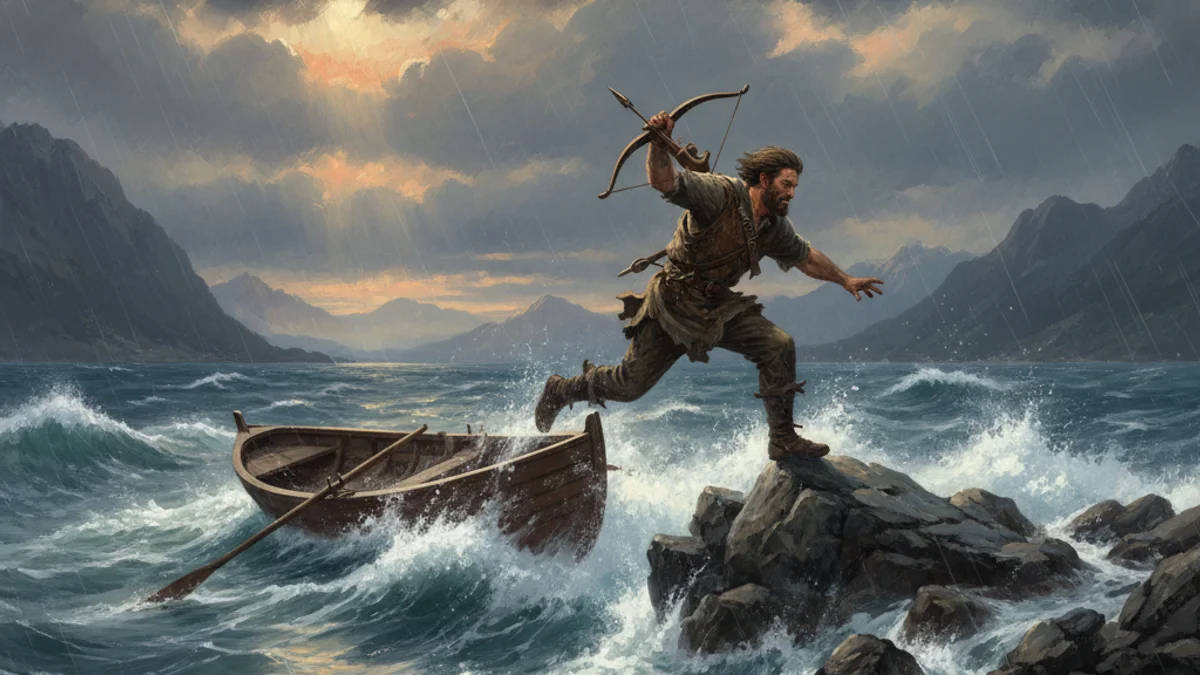
After William Tell successfully split the apple on his son's head, the cruel Governor Gessler noticed a second arrow tucked in Tell's belt. When Tell boldly confessed it was intended for the tyrant's heart should the first have harmed his son, Gessler ordered him bound and taken to the dungeon at Küssnacht. As they crossed Lake Lucerne, a violent storm erupted, threatening to sink the vessel. Knowing Tell was a master oarsman, the terrified guards released his bonds so he could navigate them to safety. Tell steered the boat toward a flat rocky ledge, now known as the Tellsplatte. With a sudden, powerful leap, he sprang onto the shore, kicking the boat back into the churning waves. Seizing his crossbow, he fled into the mountains and waited at the narrow pass of Hohle Gasse. There, he fired his final bolt, ending Gessler’s life and sparking the flame of Swiss independence.
The Moral
True courage and skill, fueled by a love for liberty, can turn a captive's chains into the tools of a tyrant's downfall.
“This second arrow was for you, had I struck my child.”
Fun Fact
The rock where Tell allegedly leaped ashore is now the site of Tell's Chapel, a popular pilgrimage site in Switzerland decorated with frescoes of his life.
Frequently Asked Questions
What is the moral of William Tell's Escape?
The story teaches that resourcefulness and bravery can overcome tyranny. It emphasizes that those who fight for justice and family can find a way to triumph even in the most desperate circumstances.
Why was William Tell arrested after the apple shot?
He was arrested because he admitted that a second arrow he carried was intended to kill Governor Gessler if the first had harmed his son. This act of defiance led the tyrant to order his lifelong imprisonment.
How did William Tell manage to escape the boat?
A fierce storm on Lake Lucerne forced his captors to unbind him so he could use his superior rowing skills to save them. He used this opportunity to steer the boat close to a rocky ledge and leaped to freedom.
Where did William Tell's escape take place?
The escape occurred on Lake Lucerne in Switzerland. The specific rock where he is said to have jumped ashore is known as the Tellsplatte, which is still a famous landmark today.
What happened to Gessler after the escape?
Tell waited in ambush at a narrow road called the Hohle Gasse. When Gessler and his men passed through, Tell used his famous marksmanship to shoot Gessler with his remaining arrow, ending the governor's reign.
Is the story of William Tell's escape historically true?
While William Tell is a powerful symbol of Swiss independence, historians debate his existence. The story is considered a legendary folk tale that blends historical sentiment with mythic heroism.
Discussion (0)
Share your thoughts on this story
No comments yet. Be the first to share your thoughts!