Story Summary
Discover the legend of Xu Xian and the White Snake, a timeless Chinese myth of love, magic, and the tragic struggle between a mortal man and a serpent spirit.
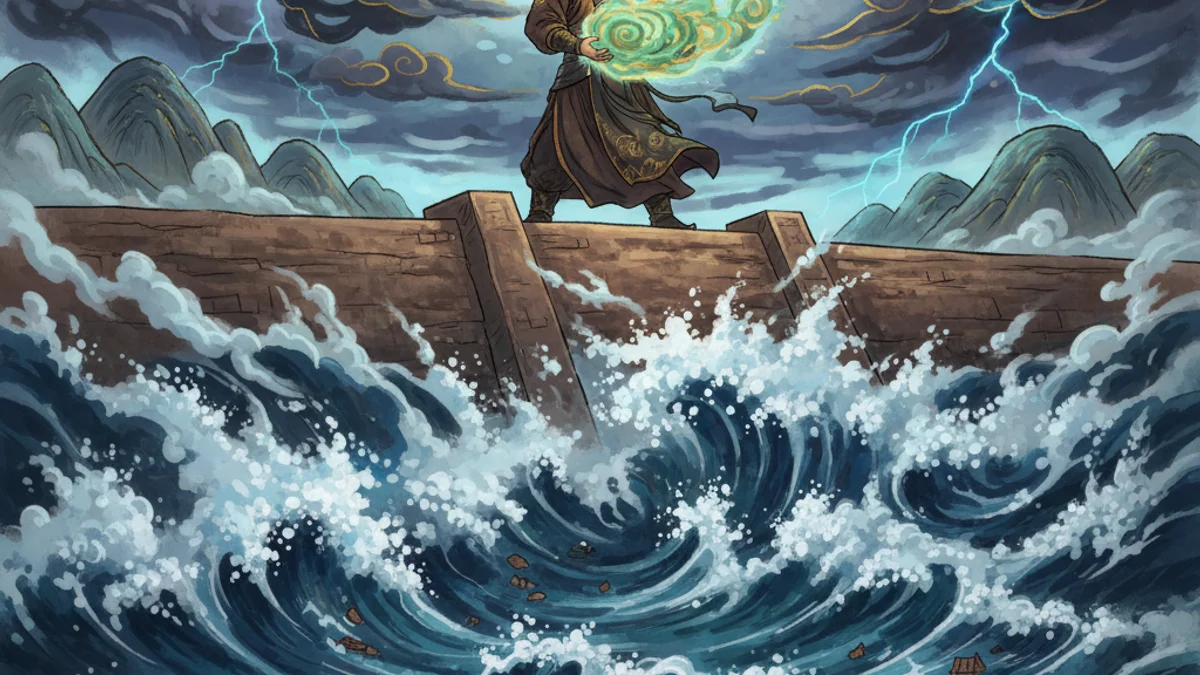
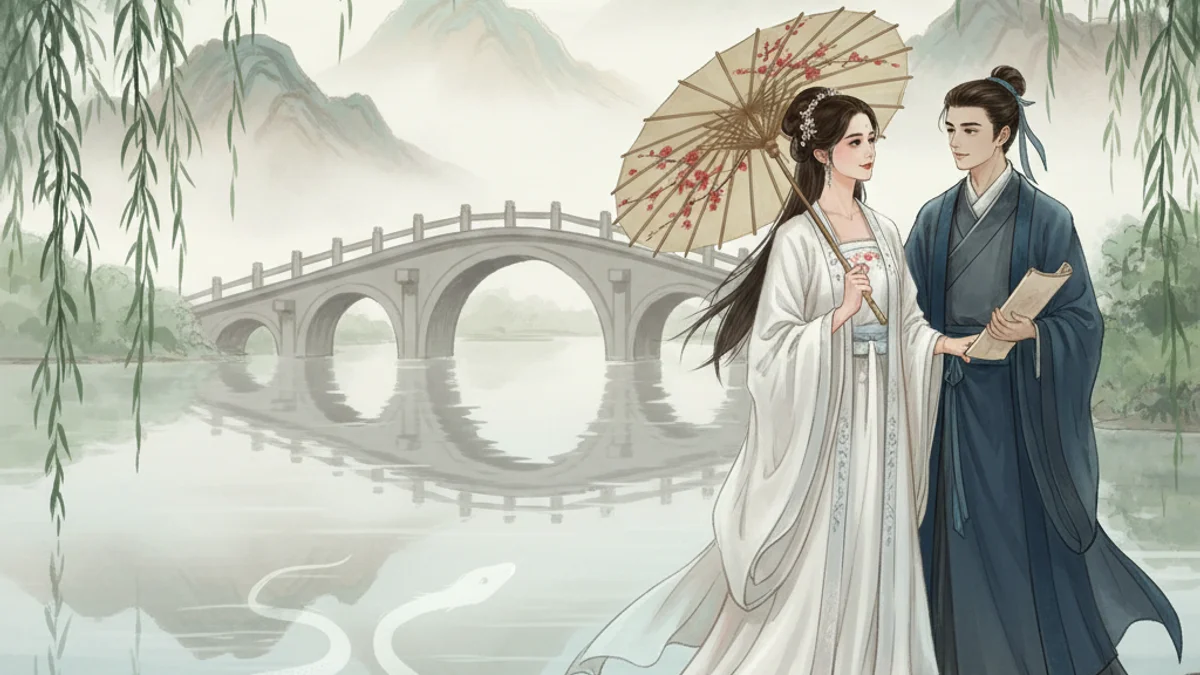
In the mist-shrouded beauty of Hangzhou’s West Lake, a scholar named Xu Xian met a beautiful woman named Bai Suzhen under a silken umbrella. Unknown to him, she was a thousand-year-old White Snake spirit who had taken human form to experience love. They married and lived happily, opening a medicine shop to heal the poor. However, their bliss was noticed by the rigid monk Fahai, who believed spirits and humans must never mingle. During the Dragon Boat Festival, Fahai convinced Xu Xian to serve his wife realgar wine, which forced her back into her serpent form. The shock killed Xu Xian, but Bai Suzhen risked her life to steal a magical herb from the heavens to revive him. Despite her devotion, Fahai eventually imprisoned Xu Xian at Jinshan Temple. In a desperate attempt to rescue him, Bai Suzhen used her powers to flood the temple, but her strength failed. She was eventually captured and imprisoned beneath the Leifeng Pagoda, separated from her husband until her son could one day earn her freedom through filial piety.
The Moral
True love is defined by devotion and sacrifice rather than outward form, while rigid prejudice often causes more harm than the 'evils' it seeks to prevent.
“Love is not a matter of human or spirit, but of two souls finding one another in a vast world.”
Fun Fact
This legend is considered one of China's 'Four Great Folktales' and has been adapted into countless operas, films, and television series over the last several centuries.
Frequently Asked Questions
What is the moral of Xu Xian and the White Snake?
The story emphasizes that true character is found in one's actions and love rather than their origin. It also warns against the destructive nature of religious intolerance and rigid dogmatism represented by Fahai.
Why did the White Snake turn back into a serpent?
During the Dragon Boat Festival, she was tricked into drinking realgar wine. In Chinese folklore, realgar is believed to ward off pests and spirits, which stripped away her human disguise.
Who is the antagonist in the Legend of the White Snake?
The primary antagonist is the monk Fahai. He represents strict adherence to cosmic order and views the union between a human and a spirit as a dangerous violation of natural law.
Where does the story of Xu Xian take place?
The legend is set primarily in Hangzhou, China, specifically around the famous West Lake and the real-life Leifeng Pagoda, which still stands today as a major landmark.
What happened to the White Snake at the end?
She was defeated by Fahai and imprisoned beneath the Leifeng Pagoda. In many versions, she is eventually freed years later when her son passes the imperial examinations and offers prayers for her.
Is the Legend of the White Snake a true story?
It is a work of fiction and oral tradition that evolved over centuries. While the locations like West Lake are real, the characters are mythological figures from Chinese folklore.