Story Summary
Explore the Persian epic of Yusuf and Zulaikha, a timeless tale of beauty, temptation, and the journey from earthly obsession to divine spiritual love.
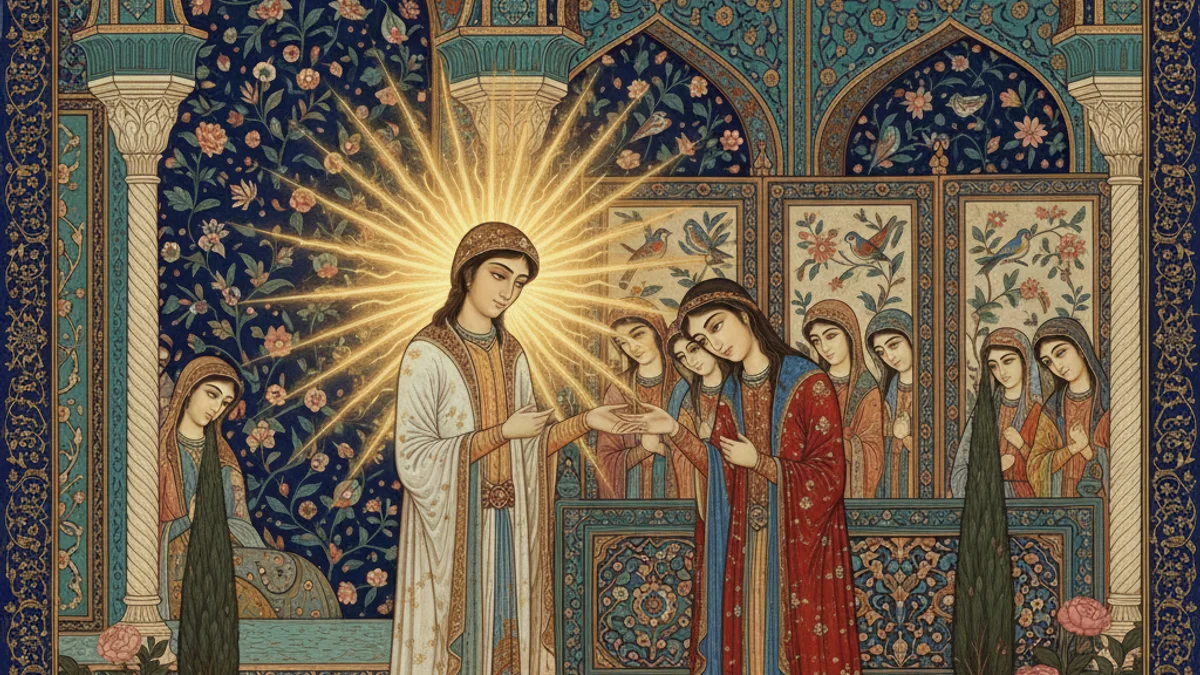
Yusuf was a youth of such celestial beauty that he seemed carved from light itself. Sold into slavery in Egypt by his envious brothers, he entered the service of the Grand Vizier, whose wife, Zulaikha, became instantly consumed by a desperate passion for him. She constructed a labyrinthine palace of seven rooms, each more intimate than the last, attempting to trap and seduce the virtuous Yusuf. Though he fled her advances, choosing a prison cell over a bed of sin, Zulaikha's obsession only deepened. Years passed; Yusuf rose to become a powerful advisor to the King, while Zulaikha fell into poverty and blindness, her once-fabled beauty withered by grief. Yet, in her solitude, her earthly longing purified into a divine love for the Creator. When they finally met again, Yusuf recognized her spiritual transformation. By divine grace, her sight and youth were restored, and the two were joined in a holy union, illustrating that the path of love leads ultimately to the Divine.
The Moral
True love transcends physical desire and worldly obsession, eventually evolving into a profound spiritual devotion to the Divine.
“I was a slave to his beauty, but now I am a slave to the One who created that beauty.”
Fun Fact
Jami's version of the story is so influential that the name 'Zulaikha' has become synonymous in many Eastern cultures with a woman whose love is boundless and transformative.
Frequently Asked Questions
What is the moral of Yusuf and Zulaikha?
The story teaches that earthly passion can be a catalyst for spiritual awakening. It emphasizes that true beauty is a reflection of God and that virtue and patience lead to ultimate fulfillment.
Is the story of Yusuf and Zulaikha in the Quran?
Yes, it is featured in Surah Yusuf, which is often called 'The Most Beautiful of Stories.' The Persian literary tradition later expanded this narrative into a romantic epic.
Who wrote the most famous Persian version?
The 15th-century poet Jami wrote the most celebrated version of the story. His work is a masterpiece of Sufi literature that uses the romance as an allegory for the soul's longing for God.
Why did the Egyptian women cut their hands?
In a famous scene, Zulaikha invited her critics to a banquet and presented Yusuf. They were so overwhelmed by his divine beauty that they became entranced and accidentally cut their hands with fruit knives.
Do Yusuf and Zulaikha end up together?
In the Persian Sufi tradition, yes. After Zulaikha undergoes years of suffering and turns her heart toward God, her youth is restored, and she and Yusuf are married in a blessed union.
What does Yusuf represent in Persian poetry?
Yusuf represents the ultimate standard of physical and spiritual beauty. In Sufi symbolism, he is often seen as a manifestation of Divine Light that draws the soul toward the Creator.
Discussion (0)
Share your thoughts on this story
No comments yet. Be the first to share your thoughts!