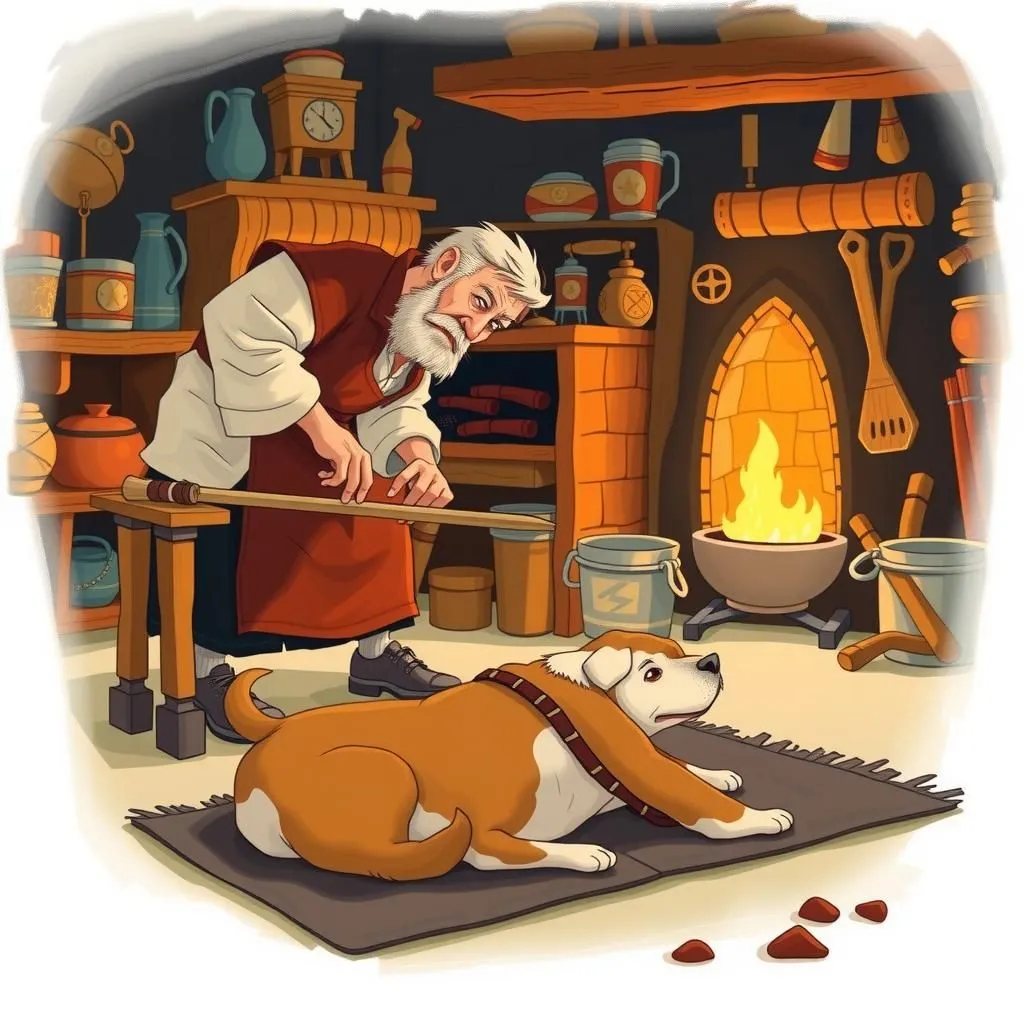
A brazier's beloved dog, who sleeps while his master works, eagerly wakes to beg for food at mealtime. Frustrated, the brazier scolds the dog for being lazy, emphasizing that hard work is essential to earn sustenance. This simple short story with moral highlights the importance of labor, making it an engaging moral tale suitable for personal growth and moral stories for class 7.
The moral of the story is that one must work and contribute in order to deserve the rewards and benefits of their efforts.
This fable, attributed to Aesop, a storyteller from ancient Greece, highlights themes of work ethic and entitlement. Aesop's fables have been retold across cultures, emphasizing moral lessons through anthropomorphized animals, reflecting societal values regarding labor and reward. The story serves as a reminder of the importance of diligence and the virtues of hard work, resonating with similar narratives found in various folklore traditions worldwide.
This fable highlights the importance of hard work and the principle that rewards should come as a result of effort. In modern life, this moral resonates in scenarios such as a student who only seeks help from teachers or peers during exam time, rather than putting in consistent effort throughout the semester; they may find that they lack the knowledge and skills to succeed when it truly matters.

In this culturally significant moral story, a man who meticulously bred his dog to produce exceptional offspring laments the dullness of his own children after marrying his washerwoman. The dog, overhearing his complaint, suggests that the differences in their progeny may not solely be attributed to the mothers, hinting at the man's own qualities as a factor. This short story delivers simple lessons from stories about the importance of self-awareness and the role of personal choices in shaping outcomes, making it a compelling addition to any collection of best moral stories.

In this simple short story with moral undertones, a man learns that feeding the dog that bit him a piece of bread dipped in his blood could heal his wound. However, the dog refuses, insisting that accepting the gesture would suggest improper motives for his actions, as he claims to act in harmony with the Divine Scheme of Things. This fable highlights the lessons from moral stories about the nature of intentions and the complexities of relationships in the circle of life.

In "The Man the Horse the Ox and the Dog," a heartwarming tale from classic moral stories, a horse, ox, and dog find refuge from the cold with a kind man who provides them food and warmth. In gratitude, they divide the man's life span among themselves, each infusing their portion with attributes that reflect human nature at different stages, offering young readers valuable lessons about the impetuousness of youth, the industriousness of middle age, and the irritable nature of old age. This unique moral story serves as an entertaining and educational reminder of how our characteristics shape our lives.
The Lazy Dog's Lesson, The Hammer and the Hound, A Brazier's Best Friend, The Sluggard's Wake-Up Call, Work and Wagging Tails, The Cost of Comfort, The Eager Eater, The Craft and Canine
The story highlights the theme of the value of hard work and the principle that one should earn their rewards, contrasting the diligent labor of the brazier with the lazy behavior of his dog, who only seeks food without contributing. This fable serves as a moral lesson on the importance of contributing effort before reaping benefits.
Get a new moral story in your inbox every day.