Story Summary
Discover the profound Rumi parable Moses and the Shepherd. When Moses corrects a humble man's prayer, God reveals that true devotion lies in the heart's intent.
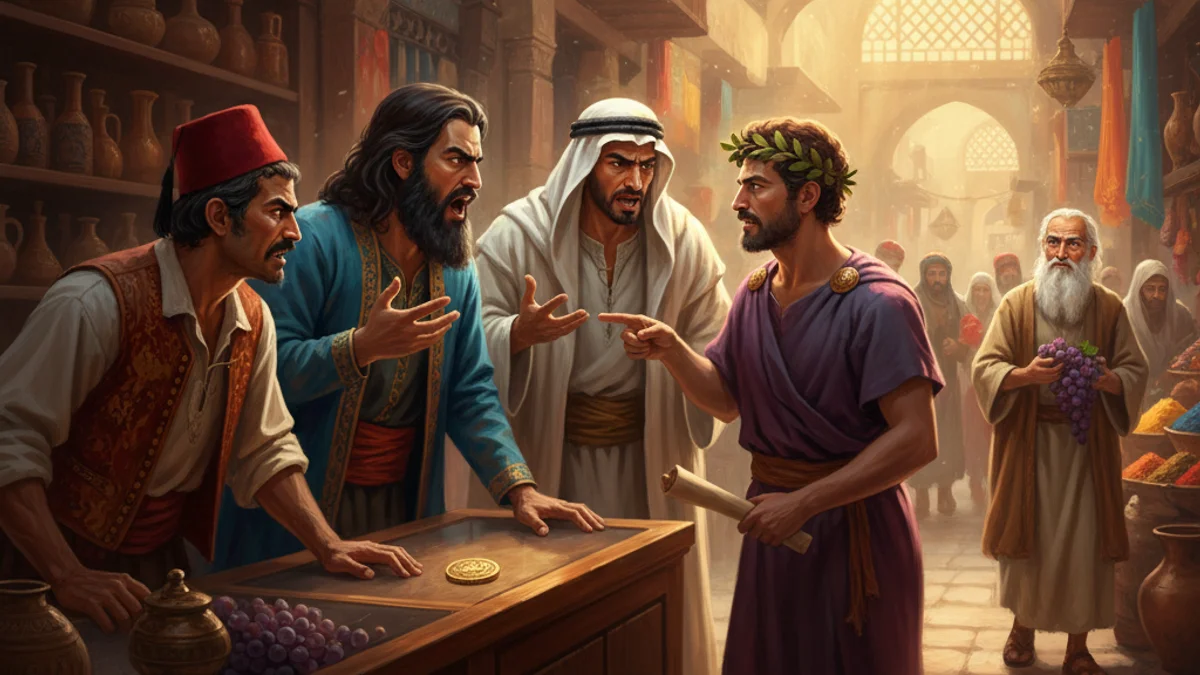
While walking through the desert, Moses encountered a humble shepherd who was talking to God with deep intimacy. The shepherd was saying, 'O Lord, where are You? I want to serve You. I want to sew Your clothes, wash Your socks, and comb Your hair. I want to bring You milk and kiss Your little hands.' Hearing this, Moses was outraged. He rebuked the shepherd, shouting, 'Stop this blasphemy! God is a Spirit; He does not wear clothes or drink milk. You have become an infidel with your foolish talk!' Crushed and ashamed, the shepherd wept and fled into the wilderness. Soon after, a revelation came to Moses from God: 'You have parted My servant from Me. I sent you to unite people with Me, not to sever the bond. I do not look at the outward speech; I look at the heart and the inward state. To him, his words were praise; to you, they seemed wrong, but his sincerity is what I cherish.' Realizing his mistake, Moses rushed into the desert to find the shepherd. When he found him, Moses apologized and said, 'Pray however your heart desires. Your simple devotion is more precious than any formal ritual.'
The Moral
God values the sincerity and love within a person's heart far more than the correctness of their outward rituals or words.
“I look not at the tongue and the speech; I look at the spirit and the inward state.”
Fun Fact
This story is a cornerstone of Rumi’s 'Masnavi,' a work so influential in the Islamic world that it is often referred to as 'The Persian Quran.'
Frequently Asked Questions
What is the moral of Moses and the Shepherd?
The moral is that true spirituality is found in the sincerity of one's heart rather than in the perfection of religious form. God cares more about the love behind a prayer than the specific words used to express it.
Why did Moses rebuke the shepherd?
Moses rebuked the shepherd because he interpreted the shepherd's words literally as blasphemy. Since God is a spirit without a physical body, Moses felt the shepherd's offer to wash God's clothes was disrespectful.
What was God's message to Moses in this story?
God rebuked Moses, explaining that His role as a prophet was to bring people closer to the Divine, not to create barriers. God emphasized that He sees the 'inward state' of a person rather than their 'outward speech.'
Who wrote the story of Moses and the Shepherd?
The story was written by the famous 13th-century Persian poet and Sufi mystic Jalal ad-Din Rumi. it is one of the most famous parables found in his masterpiece, the Masnavi.
What does the shepherd represent in the parable?
The shepherd represents the 'pure of heart'—someone whose faith is unpolluted by ego or complex theology. He symbolizes a direct, emotional, and loving connection to the Divine that transcends intellectual understanding.
How does this story apply to modern life?
It serves as a lesson in religious tolerance and empathy. It encourages people to look past the different ways others express their faith and to respect the underlying sincerity and goodness in their intentions.
Discussion (0)
Share your thoughts on this story
No comments yet. Be the first to share your thoughts!