Story Summary
Explore the wit of Mulla Nasrudin in The Smuggler. A border guard tries to find hidden treasure in straw, only to miss the obvious truth right before his eyes.
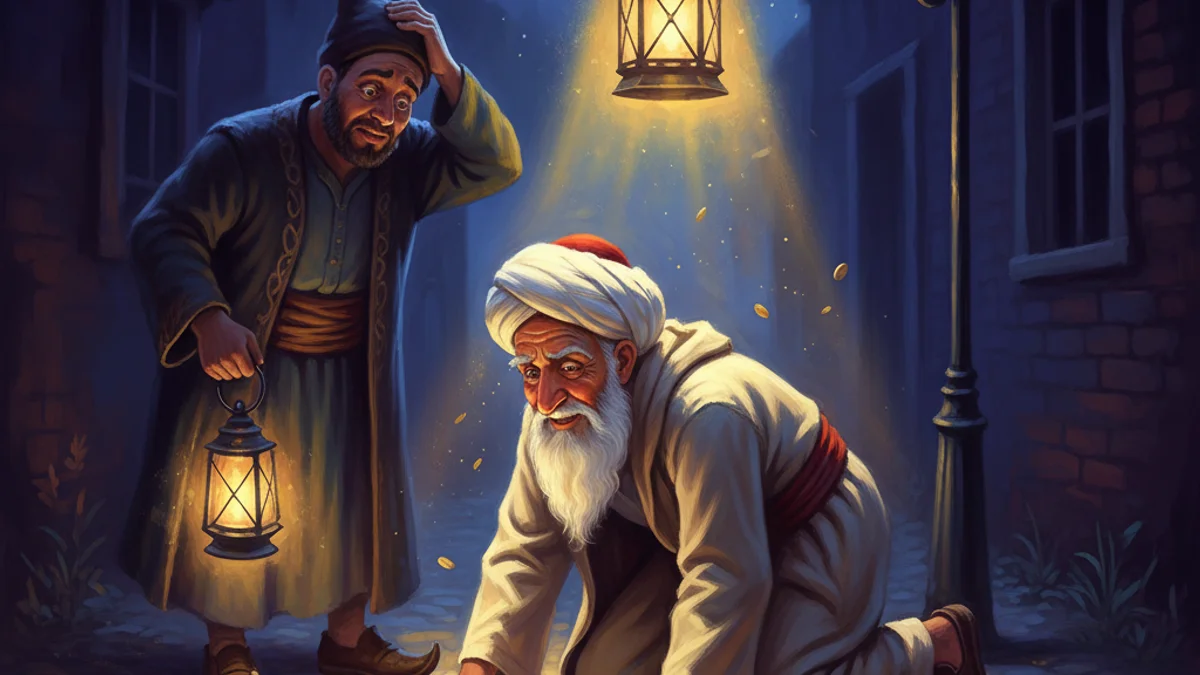
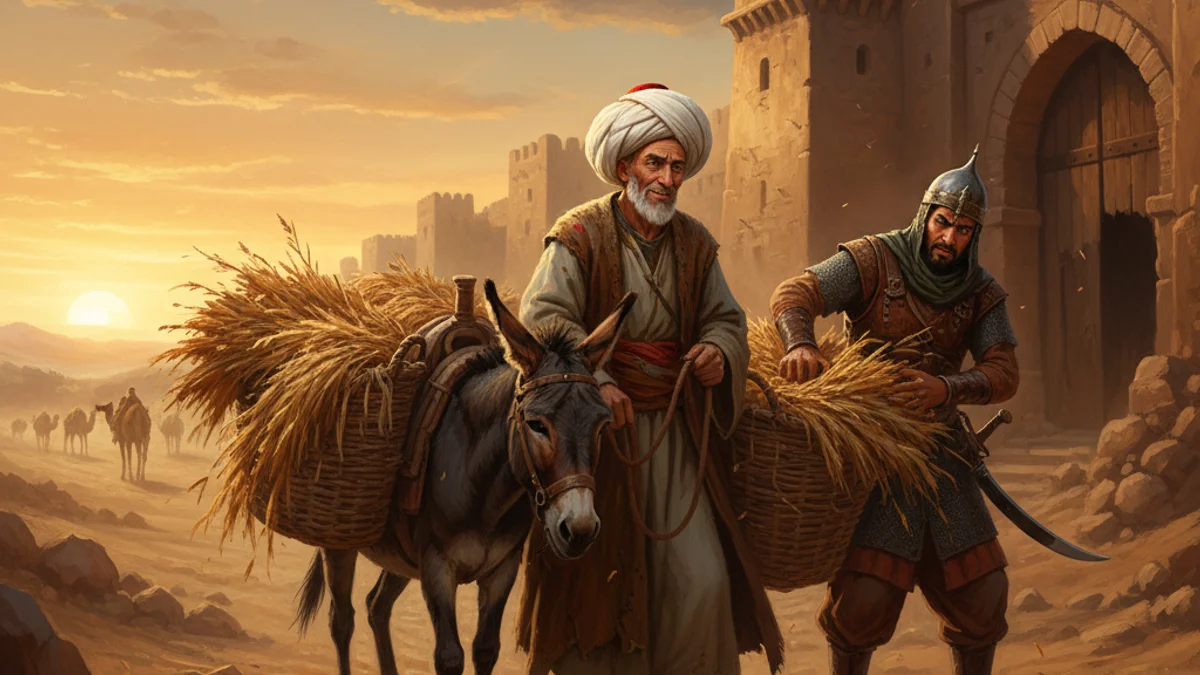
Every day, Mulla Nasrudin crossed the border with his donkey, its baskets piled high with straw. The border guard, certain that Nasrudin was a smuggler, would stop him and search every inch of the straw. He poked it with bayonets, sifted through it with his hands, and even burned samples to see if anything was hidden within. Yet, he never found a single piece of contraband. This went on for years, and Nasrudin grew increasingly wealthy while the guard grew increasingly frustrated. Long after both men had retired, they happened to meet in a marketplace. The guard, still plagued by curiosity, pleaded, 'Mulla, I am no longer an official and you are beyond the reach of the law. Tell me, what were you smuggling all those years?' Nasrudin smiled and replied simply, 'Donkeys.'
The Moral
The truth is often hidden in plain sight because we are too preoccupied with looking for something complex or hidden.
“I was smuggling donkeys.”
Fun Fact
Mulla Nasrudin is such a significant cultural figure that UNESCO declared 1996–1997 as the International Nasreddin Hodja Year.
Frequently Asked Questions
What is the moral of The Smuggler?
The story teaches that humans often miss the obvious because they are distracted by their own expectations and complexities. It encourages us to look at the world with a simpler, more direct perspective to find the truth.
Who is Mulla Nasrudin in Sufi tradition?
Mulla Nasrudin is a legendary 'wise fool' featured in thousands of stories across the Middle East and Central Asia. In Sufism, his tales are used as teaching tools to break down the ego and challenge conventional logic.
Why couldn't the guard figure out what was being smuggled?
The guard was looking for 'contraband'—small, valuable items like gold or gems that could be hidden inside the straw. He failed to see the donkey as the product itself because he assumed it was merely the transport for the straw.
What does the donkey represent in this parable?
The donkey represents the fundamental reality or the obvious truth that we often ignore while we are busy analyzing the 'straw,' which symbolizes the trivial distractions and details of daily life.
Is the Mulla Nasrudin character based on a real person?
While scholars debate his historical existence, he is most commonly associated with 13th-century Turkey. Whether real or mythical, his character serves as a universal archetype for folk wisdom and humor.
How can we apply this story to problem-solving?
This story suggests that when we are stuck on a problem, we should stop looking for hidden, complicated causes and instead examine the most obvious elements we might have taken for granted.
Discussion (0)
Share your thoughts on this story
No comments yet. Be the first to share your thoughts!