Story Summary
Explore the classic fable of The Town Mouse and Country Mouse. Discover why a simple life in peace is better than a life of luxury surrounded by constant danger.
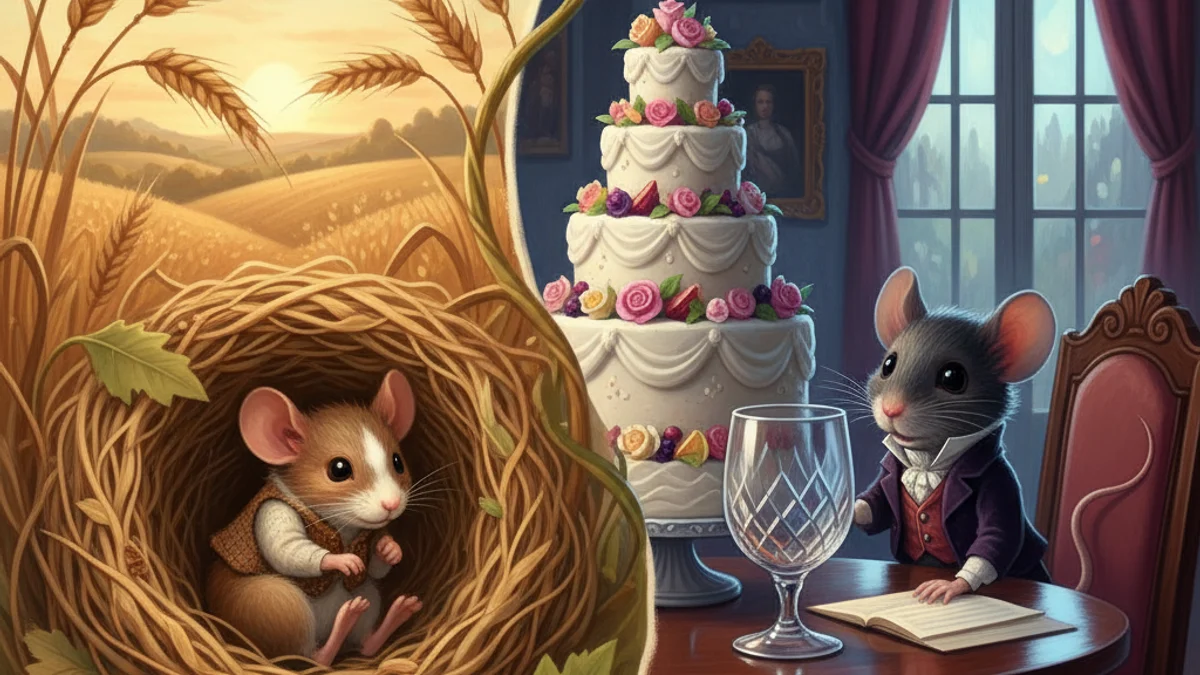
A Country Mouse invited his city cousin to a modest dinner of dried peas and barley. The Town Mouse, accustomed to fine dining, turned up his nose. 'How can you endure such poverty?' he asked. 'Come to the city and I will show you how to live.' The Country Mouse agreed. That evening, they entered a grand dining room and feasted on leftover cake, honey, and fine cheeses. Suddenly, the door burst open. A servant entered with a pack of barking dogs. The terrified mice scrambled to a dark corner, shivering in fear. When the danger passed, the Country Mouse took his leave. 'You may keep your riches,' he said. 'I prefer my simple beans in peace to your sugar in fear.'
The Moral
It is better to live in humble poverty with peace and security than to enjoy luxury amidst constant fear and danger.
“I prefer my simple beans in peace to your sugar in fear.”
Fun Fact
This fable is over 2,500 years old and was famously used by the Roman poet Horace to explain why he preferred his quiet farm to the bustling, stressful life of Rome.
Frequently Asked Questions
What is the moral of The Town Mouse and Country Mouse?
The moral is that peace and security are far more valuable than wealth or luxury. It teaches us that a modest life free from fear is better than a rich life full of anxiety.
Who wrote The Town Mouse and Country Mouse?
The story is one of Aesop's Fables, attributed to the ancient Greek storyteller Aesop. It has been retold for millennia by various authors, including the Roman poet Horace.
What happens to the mice in the city?
While the mice are enjoying a magnificent feast of cake and cheese, they are suddenly interrupted by humans and barking dogs. They are forced to hide in terror, realizing their lives are in danger.
Why did the Country Mouse leave the city?
He realized that the delicious food was not worth the constant threat of death. He decided he would rather be hungry and safe in the country than full and terrified in the city.
What did the mice eat in the country?
In the country, the mice ate simple, natural foods like dried peas, barley, and crusts of bread. It was a stark contrast to the refined sugars and cheeses found in the city.
Is there a deeper meaning to this fable?
Beyond safety, the story explores the concept of contentment and gratitude. it suggests that the 'grass isn't always greener' and that luxury often comes with hidden costs and stresses.
Discussion (0)
Share your thoughts on this story
No comments yet. Be the first to share your thoughts!