Story Summary
Discover the classic Sufi parable of The Wise Fool, where Mulla Nasrudin searches for a lost key under a lamp, teaching us a profound lesson on perspective.
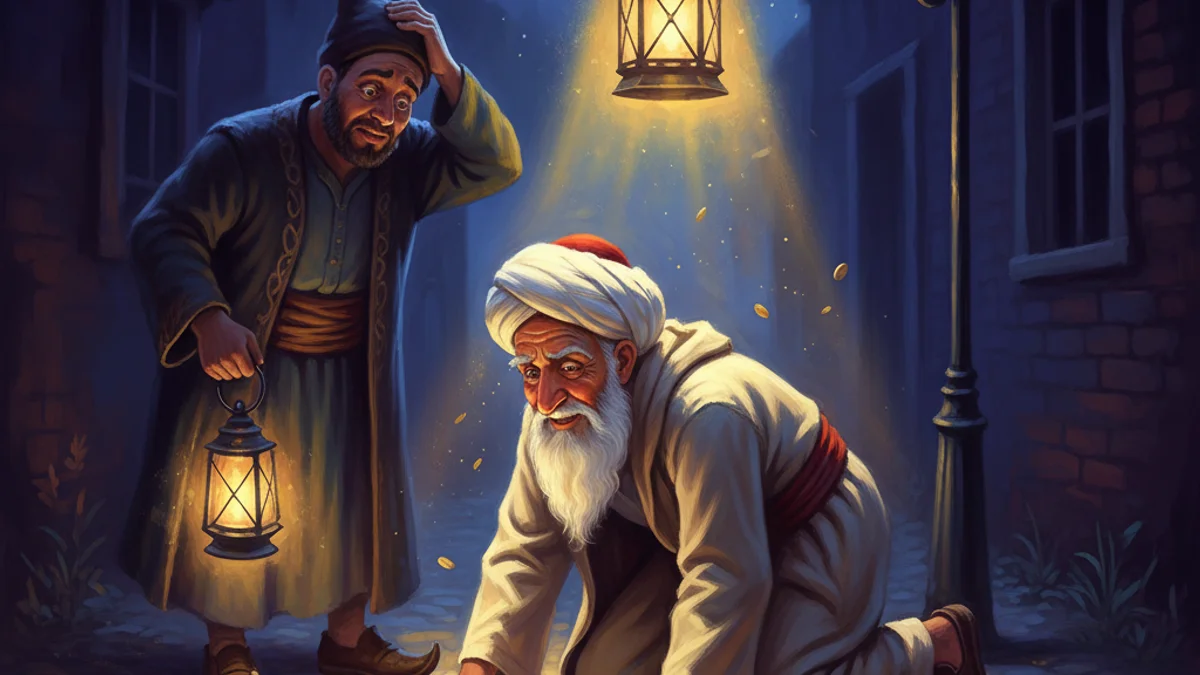
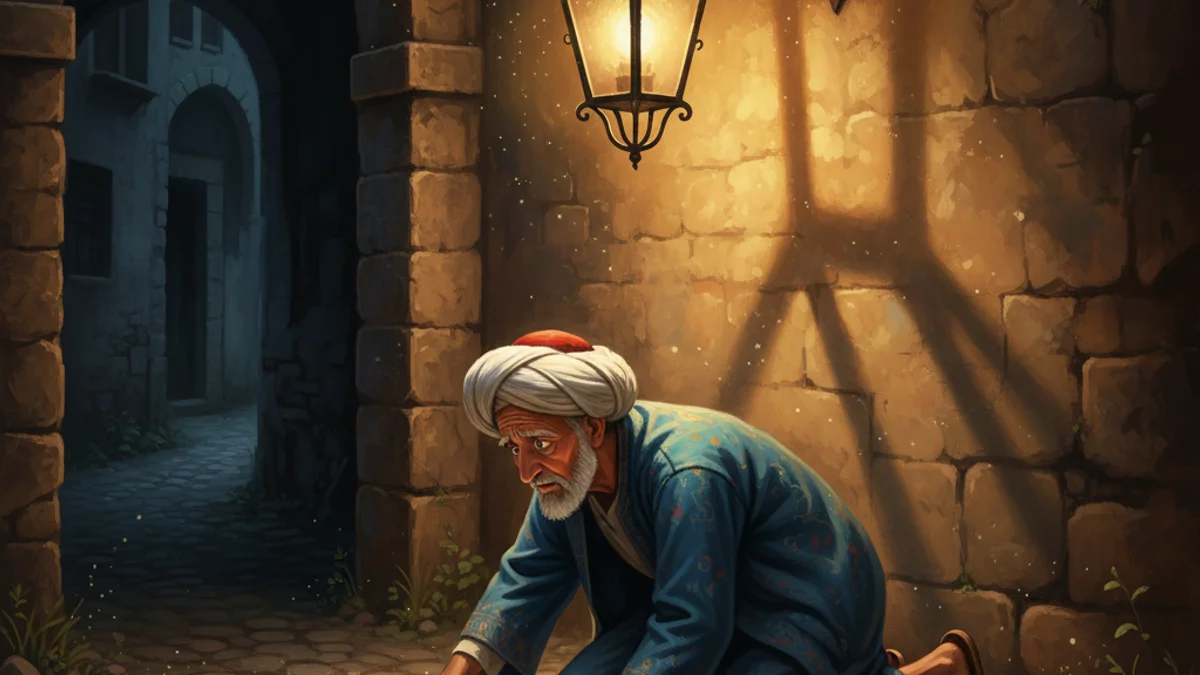
One evening, a neighbor found Mulla Nasrudin on his hands and knees beneath a street lamp, searching frantically for something. 'What have you lost, Mulla?' the neighbor asked. 'I have lost my key,' Nasrudin replied. The neighbor joined the search, but after an hour of fruitlessly scouring the ground, he asked, 'Are you certain you lost it here?' Nasrudin shook his head and pointed toward a dark alleyway across the street. 'No, I lost it over there.' Stunned, the neighbor asked, 'Then why are we looking here?' Nasrudin looked at him as if he were the simpleton and said, 'Because there is much more light here.'
The Moral
We often look for solutions where it is most comfortable or convenient rather than where the truth actually resides.
“Why look for the truth where there is light, if you lost it where it is dark?”
Fun Fact
Mulla Nasrudin stories are so culturally significant that UNESCO declared 1996–1997 as the International Nasreddin Hodja Year.
Frequently Asked Questions
What is the moral of The Wise Fool?
The moral is that humans often search for answers in convenient, external places rather than looking deep within the difficult parts of themselves where the problem originated. It highlights the absurdity of choosing comfort over truth.
Who is Mulla Nasrudin in Sufi culture?
Mulla Nasrudin is a legendary populist philosopher and satirist. He is a 'wise fool' whose humorous stories are used by Sufi teachers to bypass the ego and impart deep spiritual or psychological insights.
What does the 'light' symbolize in the story?
The light represents our comfort zones, superficial logic, and the tendency to look for easy answers. It contrasts with the darkness, which represents the internal or difficult truths we often avoid.
Is Mulla Nasrudin a real historical person?
While many cultures claim him as their own, he is largely considered a folkloric character. However, he is often associated with 13th-century Turkey and is a symbol of wit across the Islamic world.
Why is this story considered a parable?
It is a parable because it uses a simple, relatable situation—searching for a lost item—to illustrate a complex spiritual truth about human nature and the search for enlightenment.
How can we apply The Wise Fool to modern life?
It serves as a critique of modern 'quick-fix' culture. It encourages us to stop looking for happiness in material success or external validation if the 'key' to our peace was lost internally.
Discussion (0)
Share your thoughts on this story
No comments yet. Be the first to share your thoughts!